Accession No
1026
Brief Description
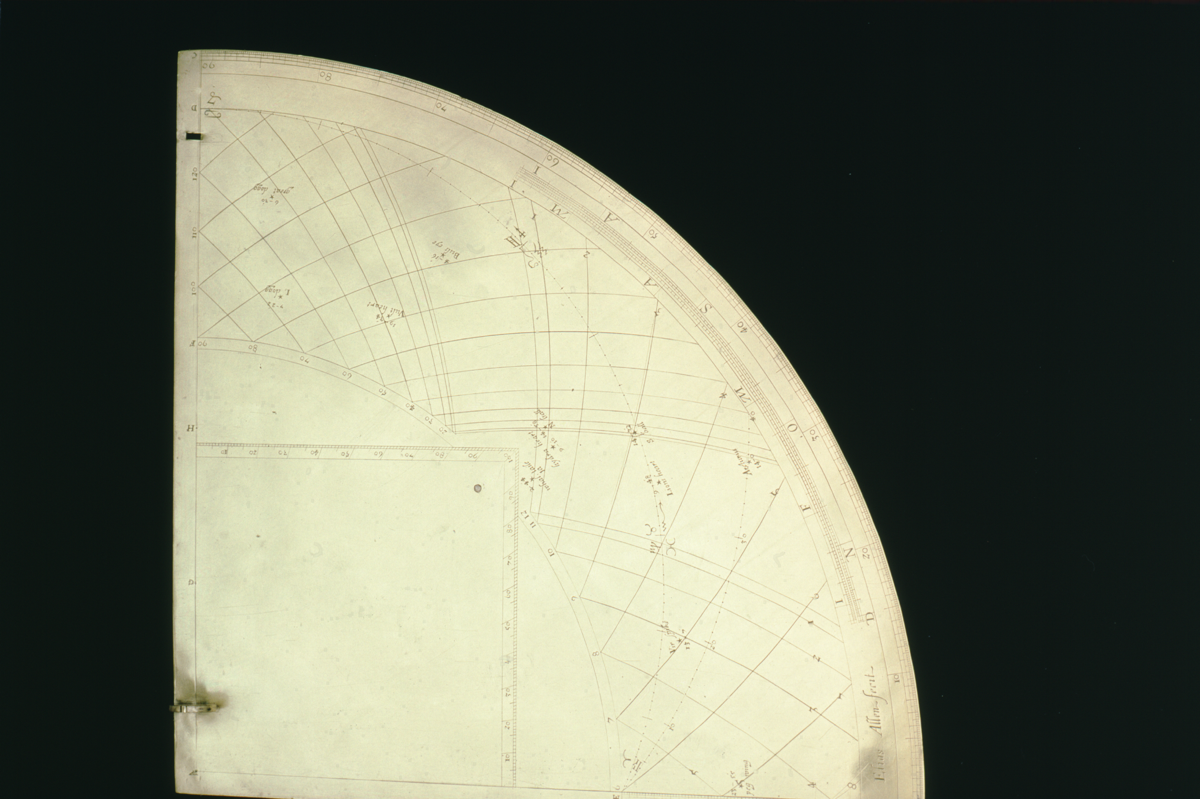
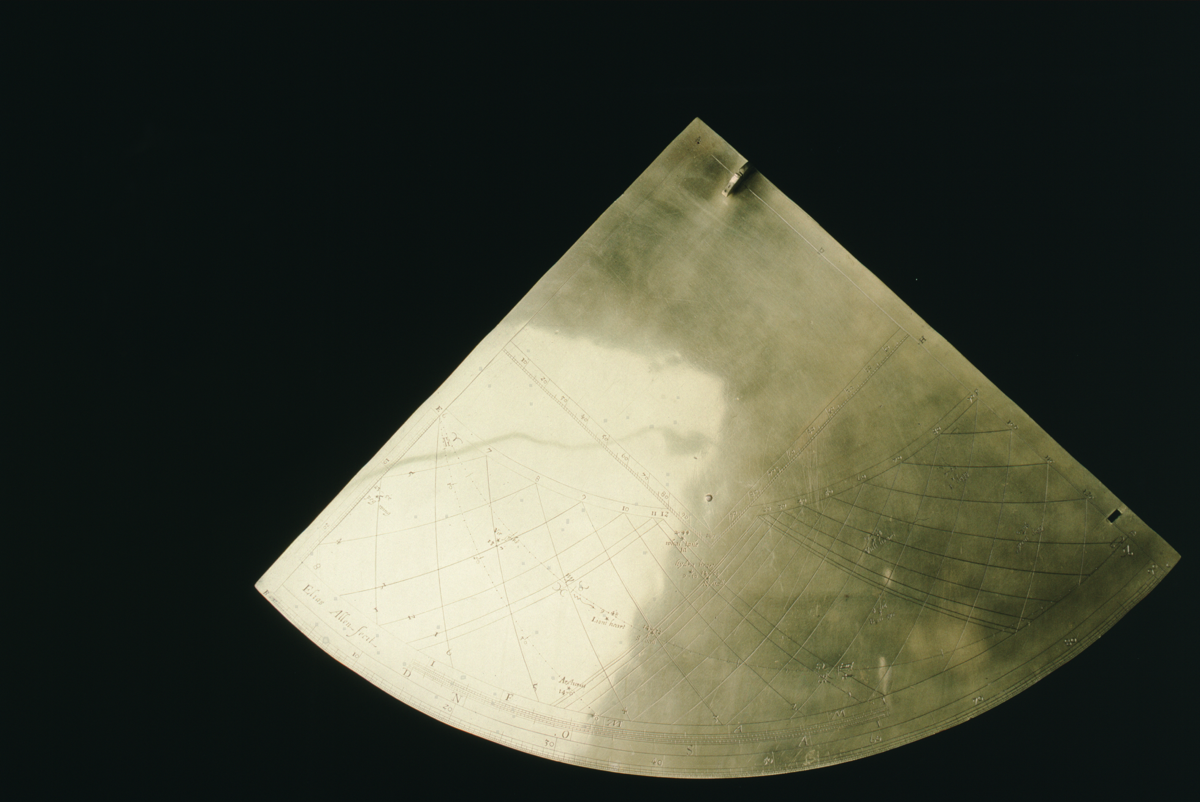
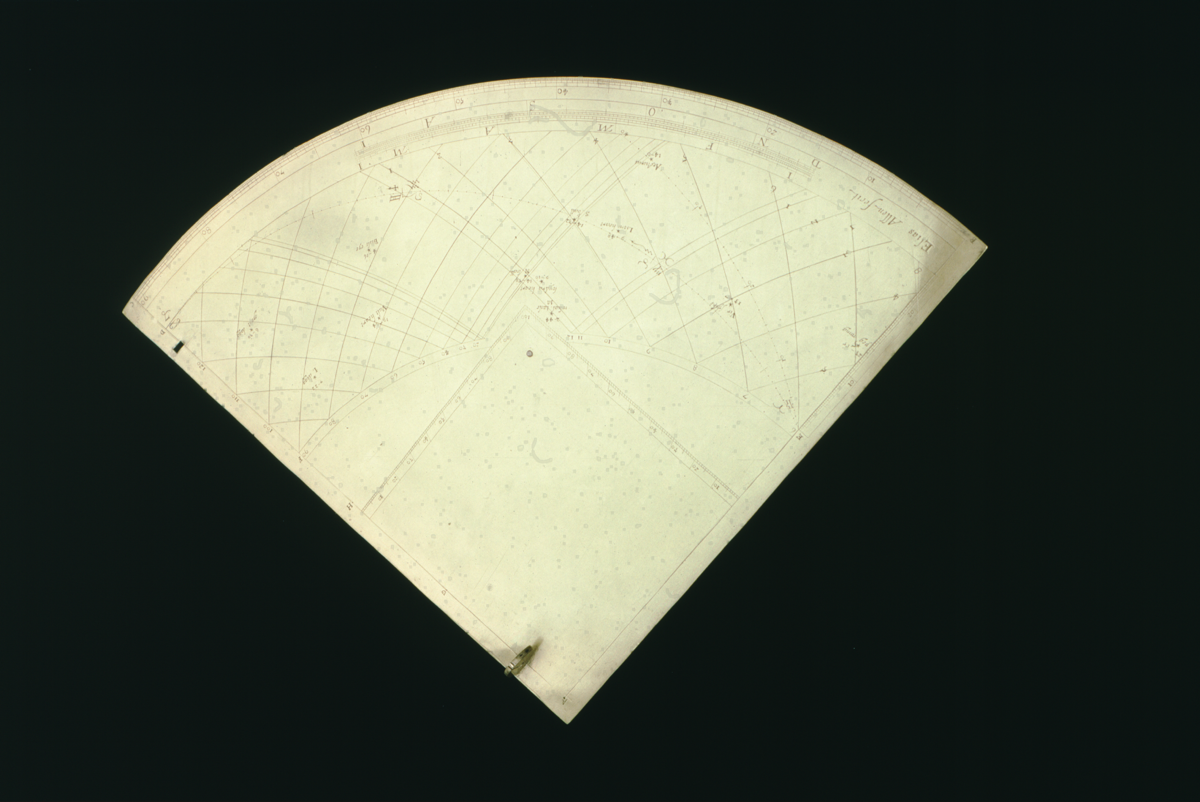
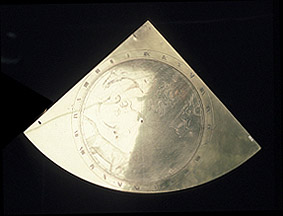
Gunter quadrant (hororary) and nocturnal, brass, by Elias Allen, English, 1640 (c)
Origin
England; London; The Strand
Maker
Allen, Elias
Class
dials
Earliest Date
1625
Latest Date
1650
Inscription Date
Material
metal (brass)
Dimensions
radius 329mm
Special Collection
Provenance
On loan from Trinity College, University of Cambridge from 1951.
Inscription
‘Elias Allen fecit’ (obverse)
Description Notes
Gunter’s (hororary) quadrant and nocturnal, brass, by Elias Allen, English, second quarter 17th century.
Obverse: Gunter quadrant projection for 52˚ N. Degree scale divided anticlockwise [0] - 90˚, numbered by 10˚, graduated to 10´. The calendar arch calibrated from solstice to solstice, months marked by initial (IFMAMIIASOND), graduated to1 day (1st Aries March 10). Projection drawn between equator and tropics. The ecliptic arc calibrated by zodiac sign (marked by symbol) to 1 day. The horizon arc divided [0] - 40˚, numbered by 10, graduated to 1. Declination scale down LHS divided [0] - [23˚ 30´], numbered by 10˚, graduated to 20´. Curved hour lines in LH of projection numbered 6 -12 - 8 (summer) and 6 - 12 - 5 (winter). Curved azimuth lines in RH of projection drawn for every 10˚ from 0 to 120˚, numbered by 10˚ from 20˚. On the projection various stars and right ascensions: ‘peg wing 23.55’, ‘Vir spike 13-7’, ‘Arcturus 14-0’, ‘Lions heart 9-48’, ‘S ball 14-32’ , ‘whal. taile ja 2-44’, ‘hydra heart 9-10’, ‘N ball 14-58’, ‘Buls eye 4-16’, ‘Vult heart 19-34’, ‘L dogg 7-22’, ‘great dogg 6-30’. Shadow square divided [0] - 100 - [0], numbered by 10, graduated to 1. Left and Right lettered ‘AEB’ and ‘AGH F D C’ respectively (these follow the illustration in Gunter’s book De Sectore et Radio).
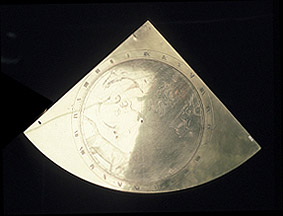
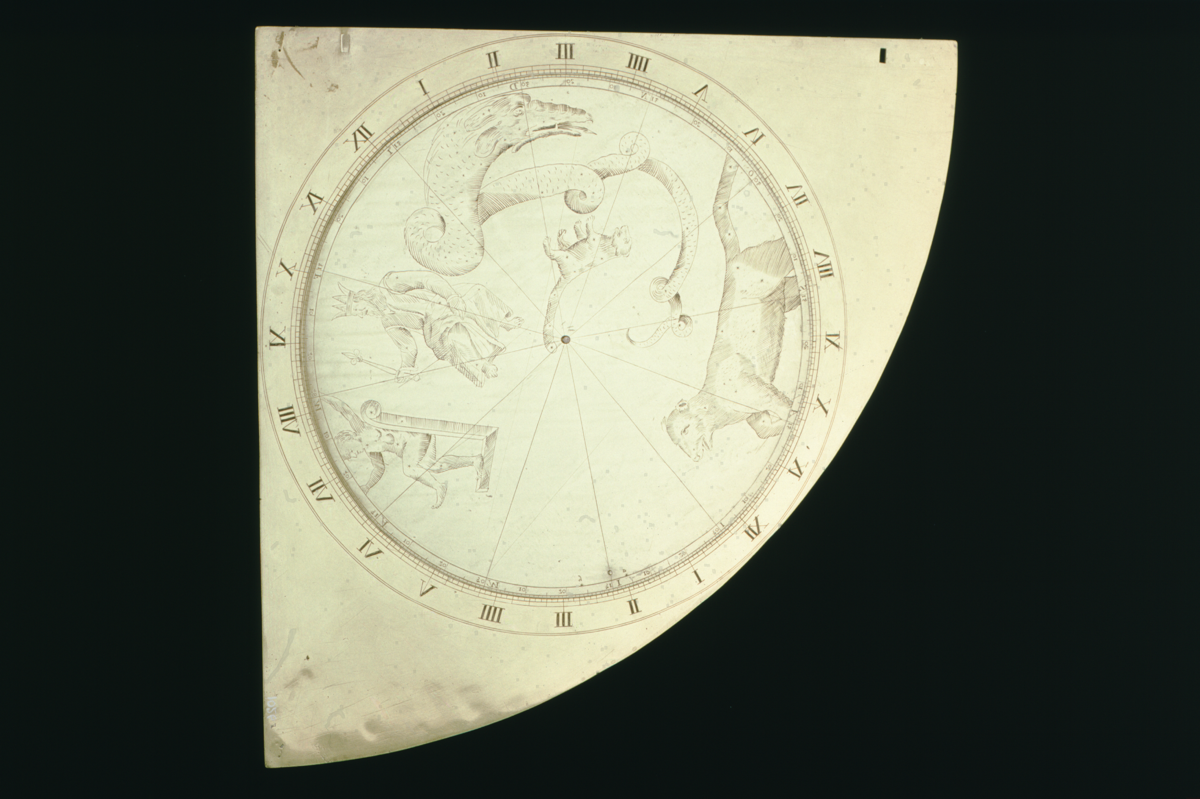
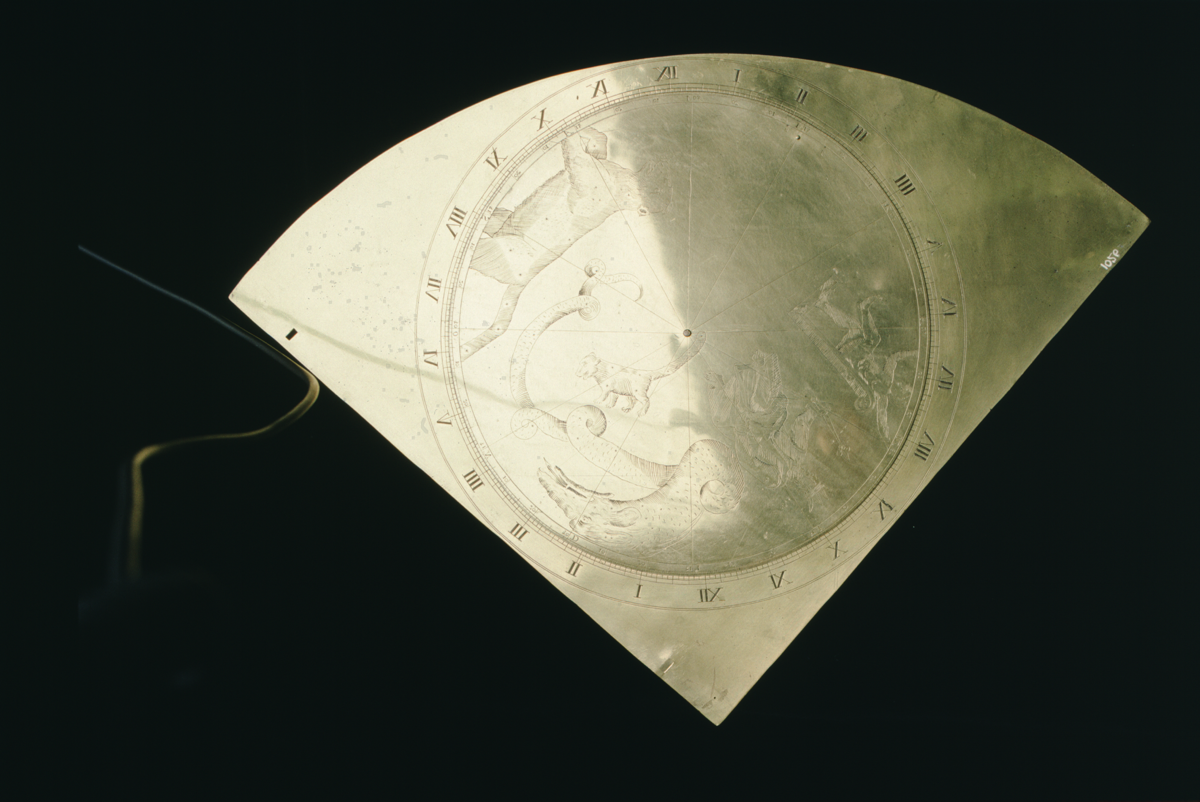
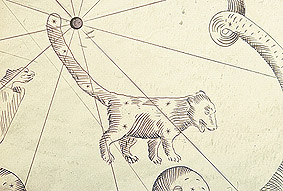
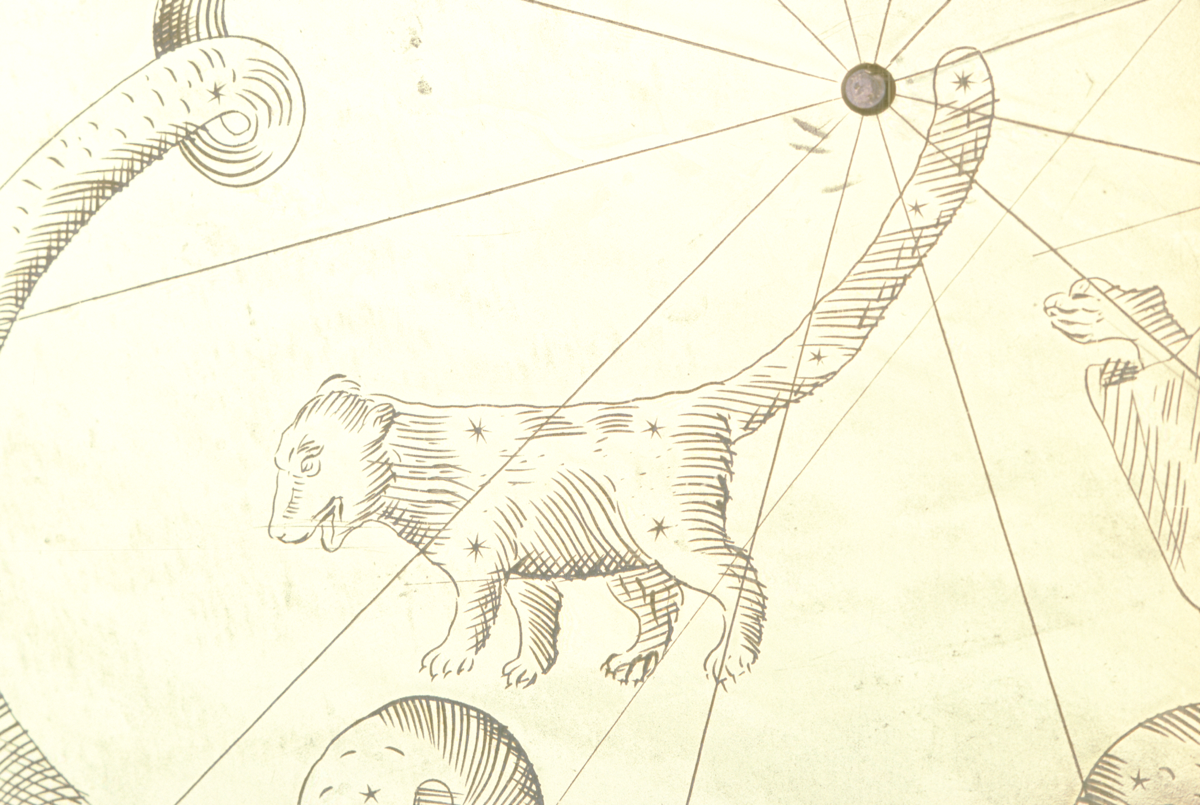
Reverse: nocturnal. Fixed hour circle divided anticlockwise I - XII, I - XII, numbered by 1, graduated to 5 minutes. Rotatable disc has date scale divided anticlockwise to month, marked by initial (IFMAMIIASOND), numbered by 10, graduated to 1 day. Pictorial representations of five circumpolar constellations (Draco, Ursa Major, Ursa Minor, Cepheus, Cassiopeia). Two stars marked on edge and named ‘a’ and ‘h’.
Condition good; incomplete (one sight and plumb bob missing)
References
Events
Description
The quadrant is an instrument used to simplify astronomical calculations and to make observations. It also carries a projection (a 2-dimensional representation) of the heavens, and can be understood as a means of gaining practical knowledge of geometry and astronomy.
Edmund Gunter's De Sectore et Radio (1623) describes what came to be known of as a Gunter quadrant, a form that was extremely popular throughout the 17th century. The quadrant could be used to observe and measure astronomical phenomena, to perform the basic tasks of surveying, and to carry out astronomical calculations.
This particular instrument, made by Elias Allen, could also be used for telling the time both during the day and at night (the latter process employing the nocturnal on the reverse).
FM:39863
Images (Click to view full size):