Accession No
3145
Brief Description
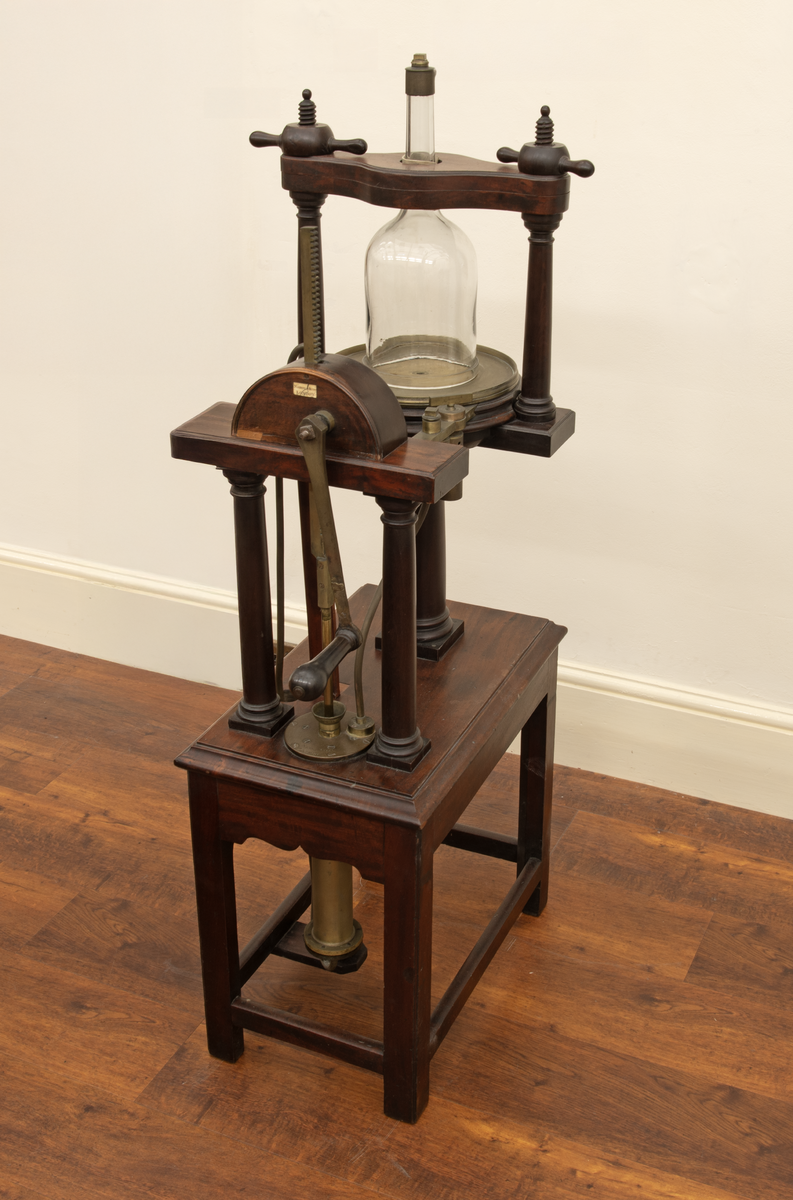
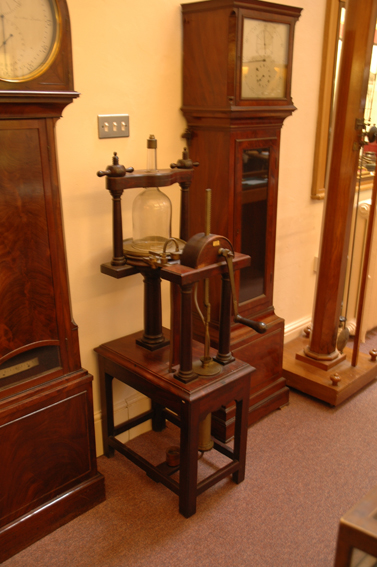
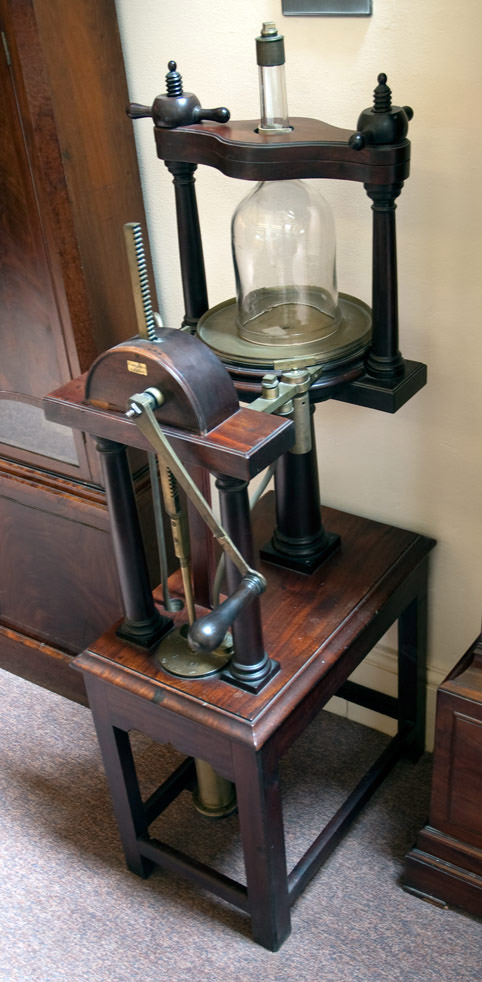
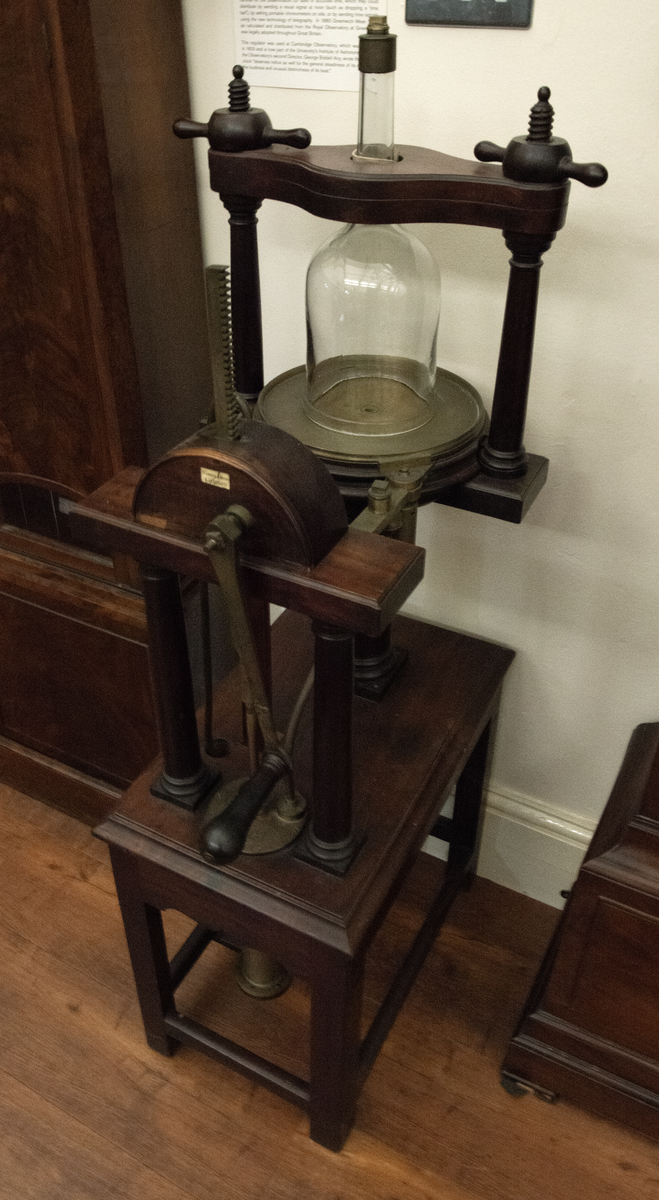
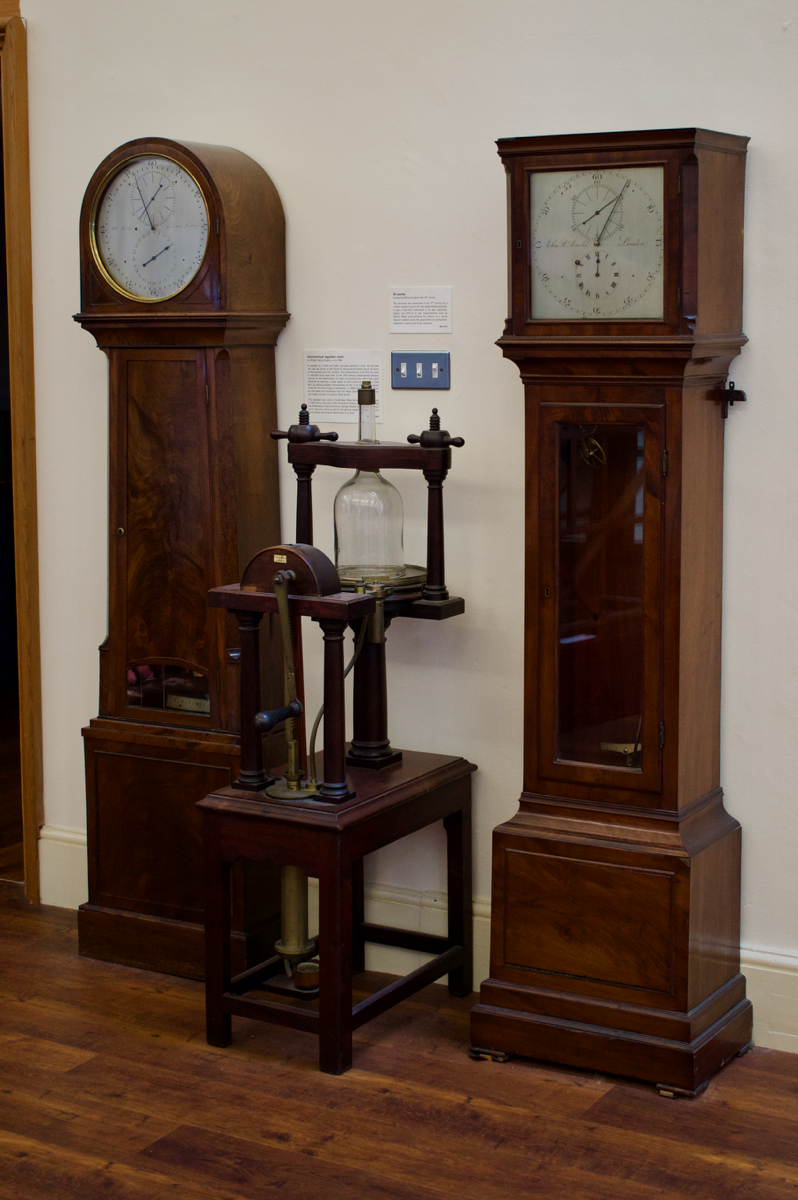
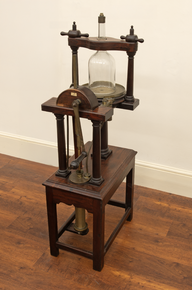
air pump (and vacuum fountain [separate object]), by Nairne and Blunt, English, late 18th Century
Origin
England; London
Maker
Nairne and Blunt
Class
physics
Earliest Date
1774
Latest Date
1793
Inscription Date
Material
glass; metal (brass); wood; ivory; cloth
Dimensions
height 1330mm; depth 660mm; width 408-480mm (depending on positioning of corkscrew wind handles). Glass attachment height 175mm; maximum diameter 90mm.
Special Collection
Provenance
Purchased from A. Brieux, Paris, 14/06/1984.
Inscription
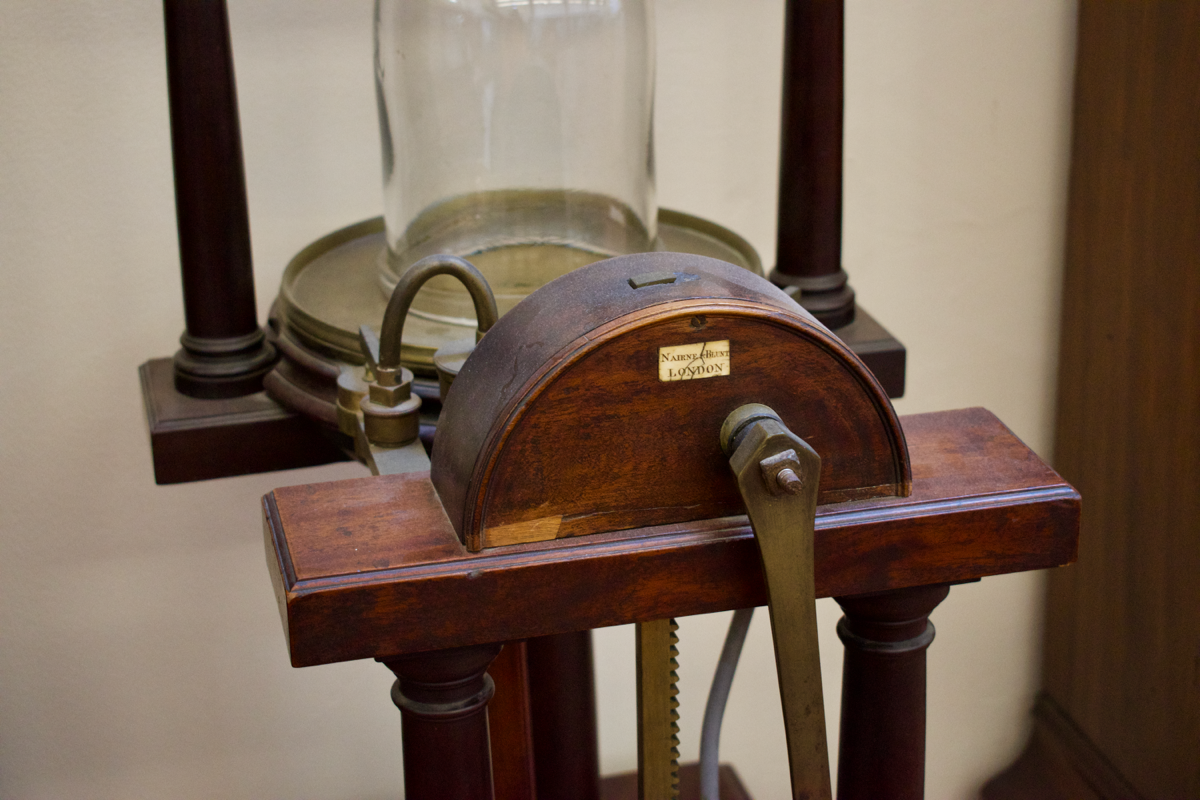
Nairne & Blunt
LONDON (ivory label near handle)
Made by
Nairne & Blunt
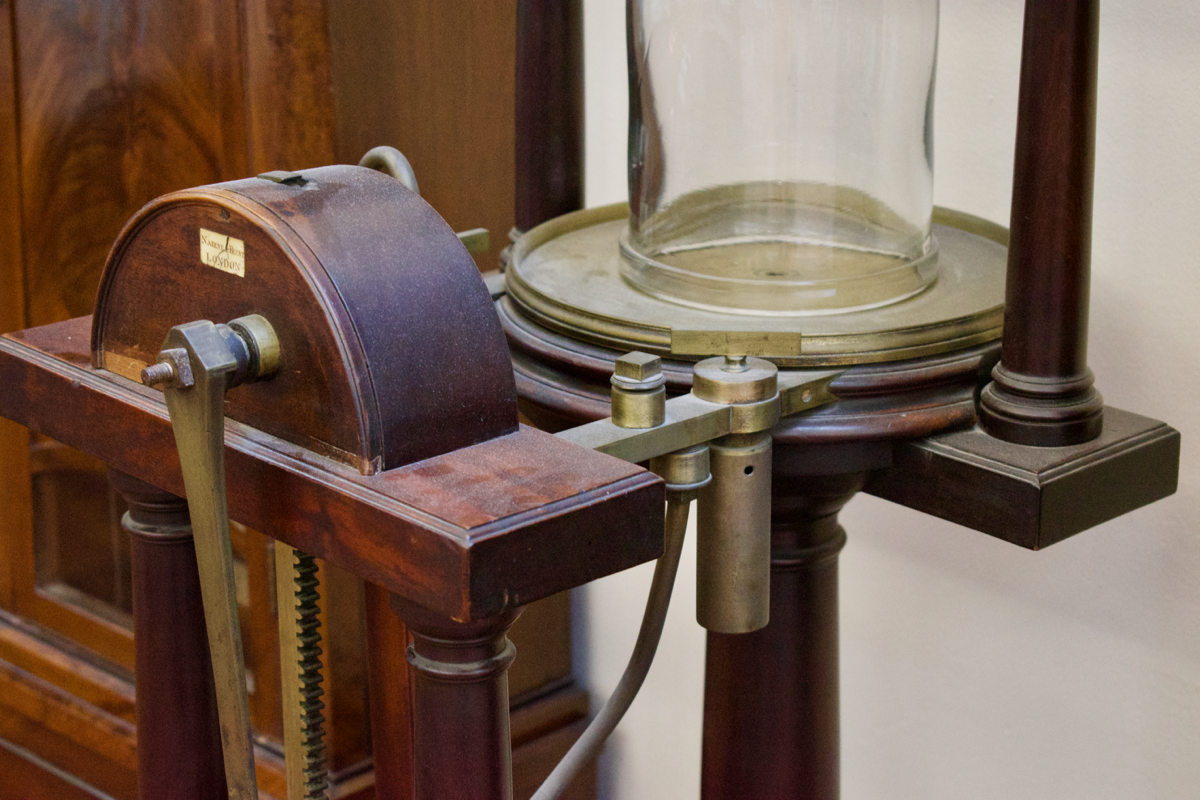
LONDON (brass disc at bottom of ratchet).
Description Notes
Air pump, by Nairne & Blunt, English, late 18th C.
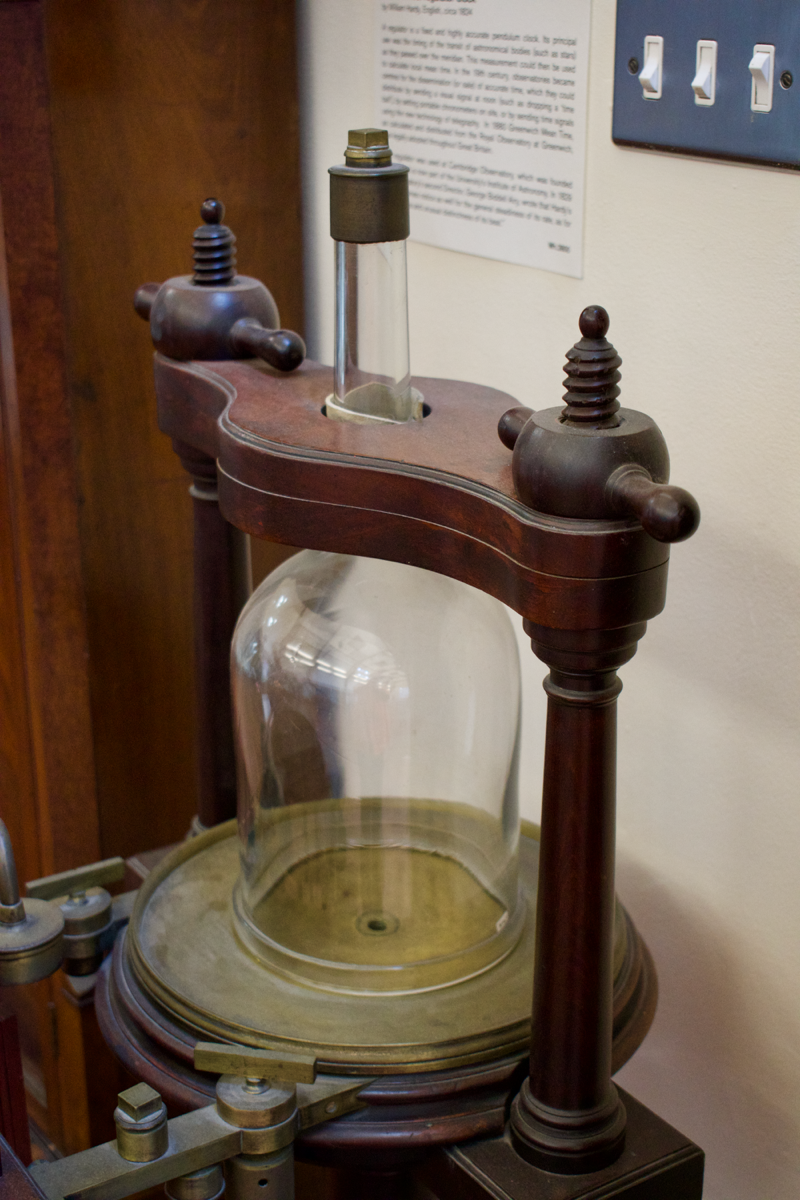
Set on a table-stand, and unusual in having only one cylinder. Wooden frame and handle. Two wooden plates around neck of bottle adjustable by corkscrew wind handles. 8 parts.
Also accessioned under this accession number (although a separate object) is a vacuum fountain, almost certainly also by George Adams (for description and image of similar example by Adams, see p280 of Morton and Wess, Public and Private Science (OUP: 1993)). This consists of a glass globe of about 100mm diameter with a brass nozzle at the top attached to a glass tube that drops down into the globe’s chamber.
References
Events
Description
In 1647 Otto von Guerricke of Magdeburg invented the first vacuum pump. Guerricke was a physicist, engineer and natural philosopher. His intention in creating the vacuum pump was to study vacuums and the role of air in combustion and respiration.
The vacuum pump is in principle a relatively simple instrument. As the handle is turned the pumps moves up and down and the air in the bell jar is evacuated and a partial vacuum is created.
A perfect vacuum is a space with no matter in it. However, a perfect vacuum has never been obtained, the most complete man made vacuum had approximately 100,000 gas molecules cc, compared to 30 billion billion in air at sea level. It is estimated that in space there is roughly one molecule per cubic meter.
A famous early demonstration of a vacuum was that carried out by Otto von Guerricke in Magdeburg. A vacuum pump evacuated air from the inside of two hemispheres that had been placed open edge to open edge. Two teams of eight horses were then attached to the hemisphere handles but failed to pull apart the “Magdeburg” hemispheres.
Created by: Boris Jardine
FM:39927
Images (Click to view full size):