Accession No
0776
Brief Description
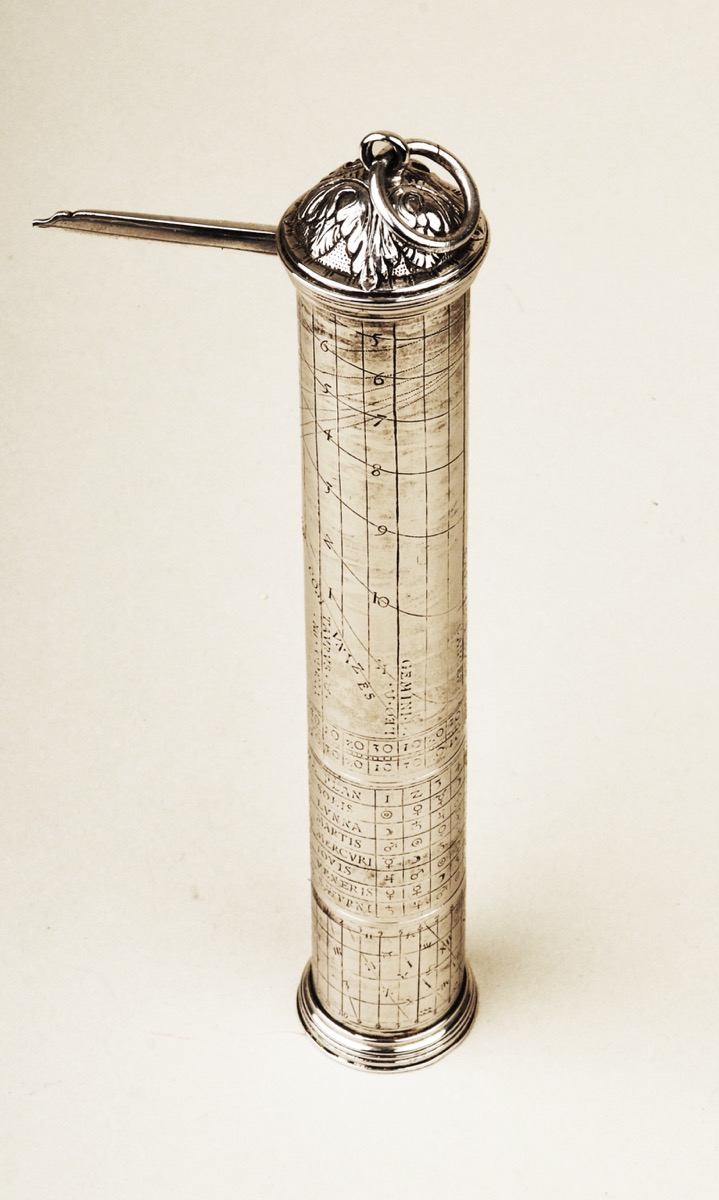
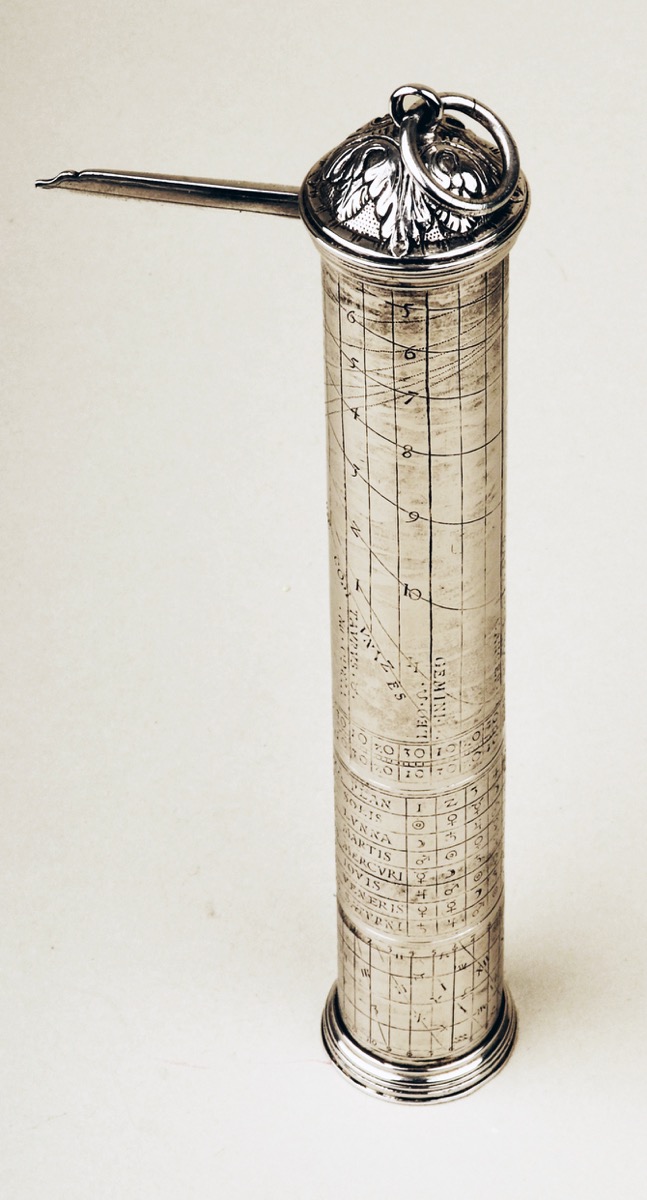
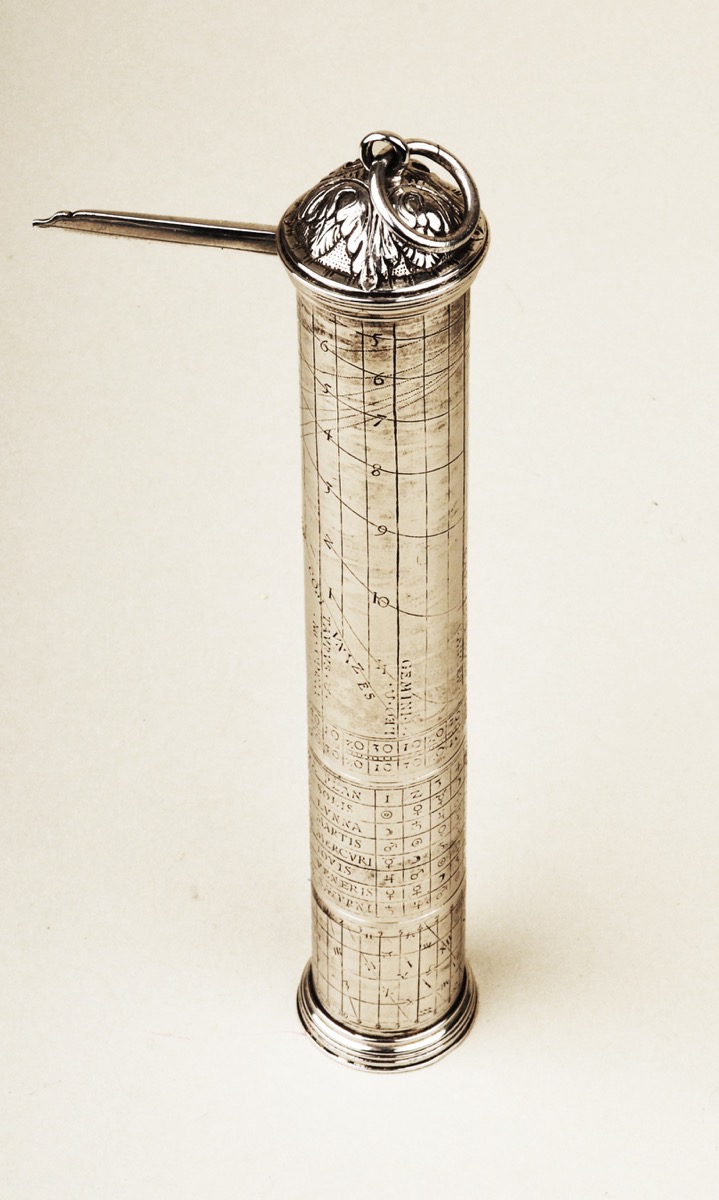
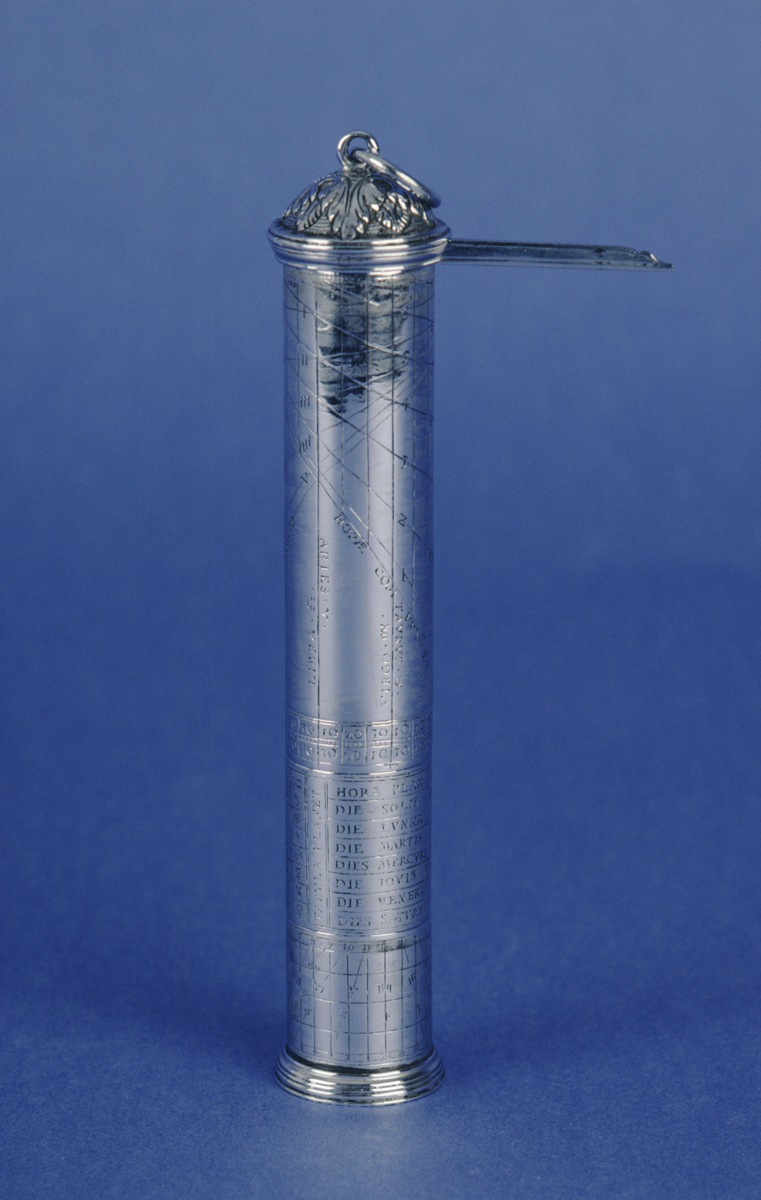
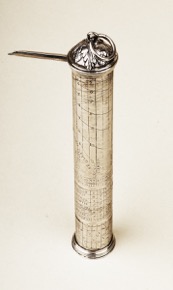
pillar dial with sand caster, silver, purportedly by Christoph Schissler, German, 1579, but actually a modern 20th-century fake
Origin
Germany; Augsburg [purported]; England [tentative attribution]
Maker
fake, unknown maker Schissler, Christoph [purported]
Class
dials
Earliest Date
1920
Latest Date
1935
Inscription Date
Material
metal (silver; rhodium)
Dimensions
height 168mm; base diameter 31mm
Special Collection
Robert Whipple collection
Provenance
Purchased by Robert Stewart Whipple from Antique Art Galleries, Grafton Street, London, England, on 08/03/1935. In 1955, Derek de Sola Price, as part of his research into possible fakes in the Whipple collection, wrote to Antique Art Galleries asking them to provide details of this object and others’ provenance. Their reply stated that they had “No idea where [this] came from.” [see OHF for Wh.0365 for copy of letter].
Inscription
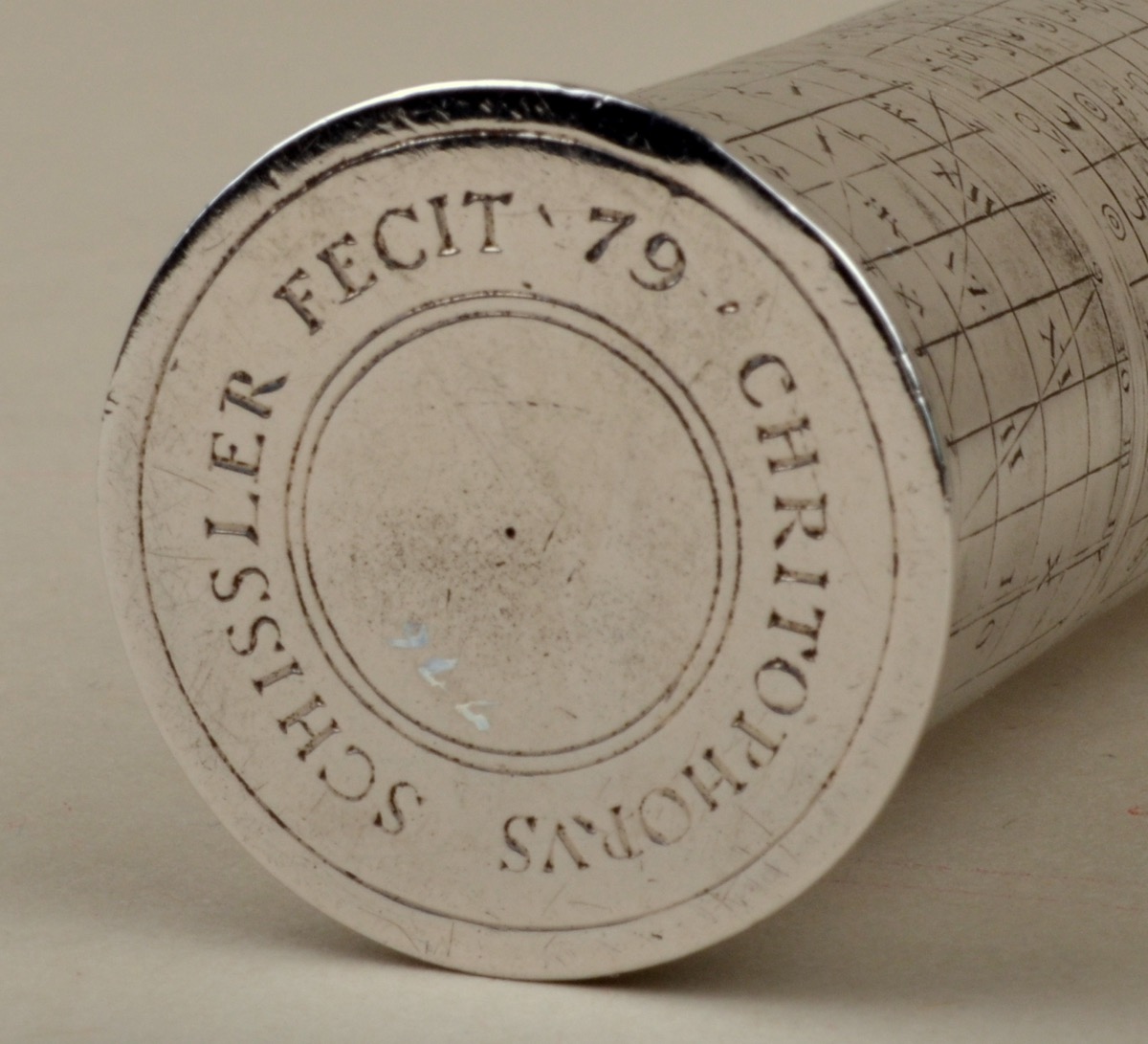
‘CHRITOPHORVS SCHISSLER FECIT 79’ [sic - spelling mistake in signature!]
Description Notes
Pillar dial with sand caster, purportedly by Christoph Schissler, German, 1579, but actually a modern C20th fake.
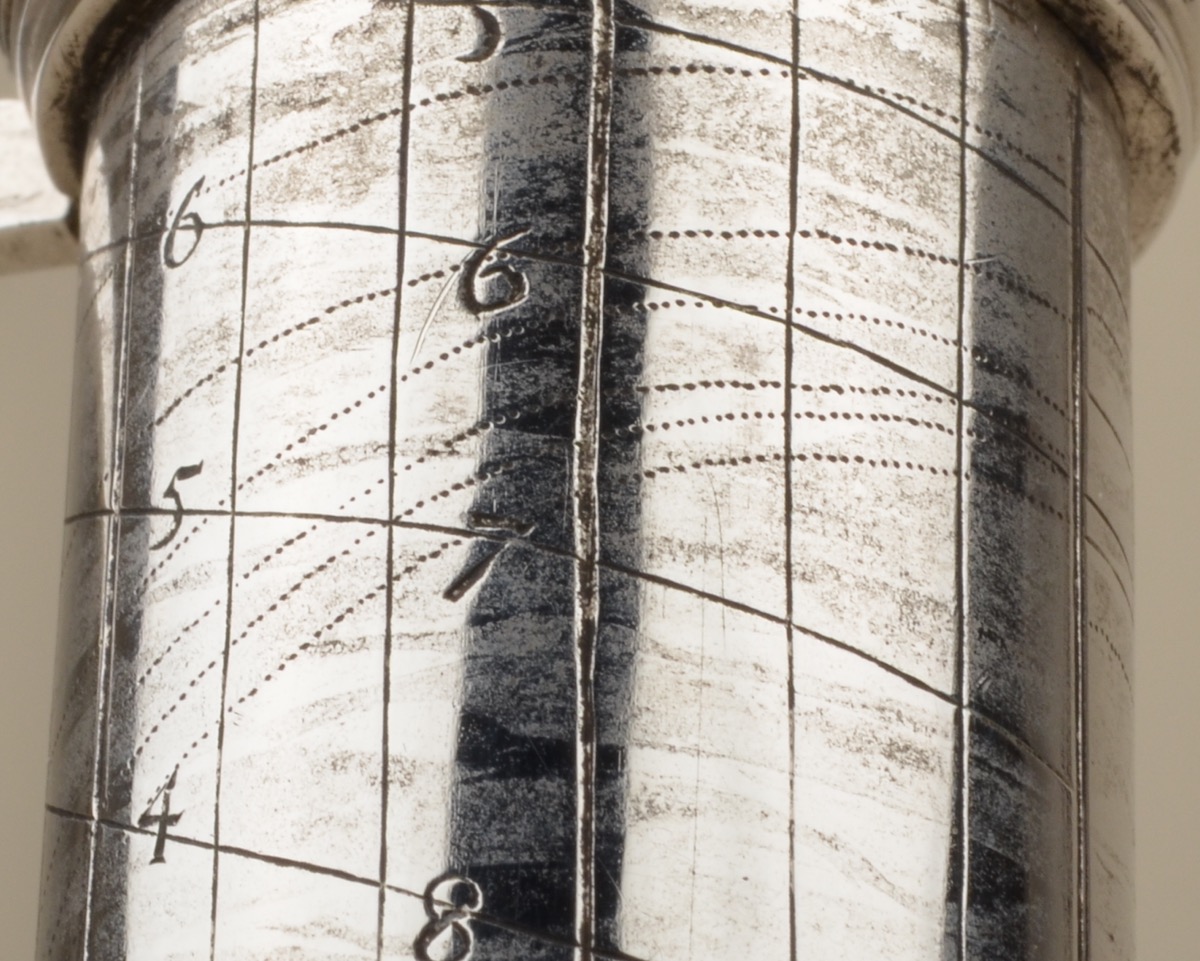
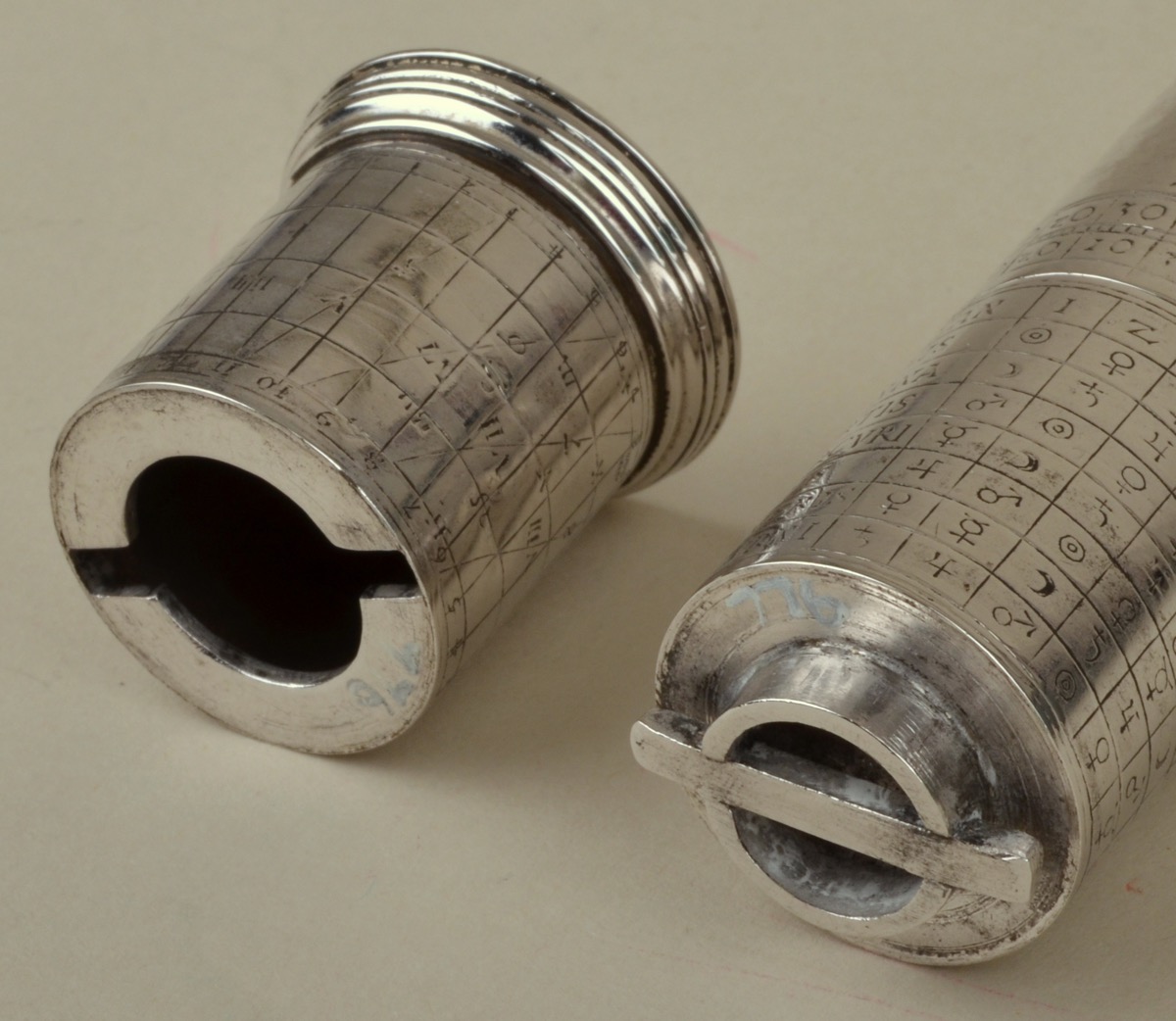
Silver pillar; cap with cast foliate decoration with gnomon hinged beneath. The cylinder is hollow and in three parts connected by an internal ‘seive’ for a sand caster. Top section calibrated with ‘half-phase’ sinusoidal hour lines divided 5 - 12, 1 - 6, numbered by 1 and marked ‘HORAE COM VN ES’ with straight date lines marked by zodiac sign and divided to 10 days and 2 days. Also half-phase sinusoidal hour lines (dotted) marked ‘HORAE PLANETARVM’, divided VI - XII, I - VI, numbered by I. Central section with ‘TABVLA PLANET’. Base section with zodiac and hour lines.
Zinner, E. Astronomische Instrumente (München, 1956), p.513. According to Zinner the instrument is of doubtful authenticity: “Wohl eine Falschung.” [”Probably a fake.”]. This analysis was corroborated on 15/04/2015 when XRF analysis of the instrument revealed that it is rhodium plated (see ‘Notes’ field).
[NOTE: On 15/04/2015 XRF analysis was conducted on this instrument. Results are given in the ‘Notes’ field.]
References
Events
Description
The Whipple Museum was intended from its outset to be first and foremost an academic institution: “a cultural accessory to modern research”.
Since 1944, the Museum has been proud to honour and maintain this legacy. A vibrant Department of History and Philosophy of Science has flourished around the museum. This is just one of the objects from R.S. Whipple’s founding collection that remains a crucial resource for research into past science.
*The 'Mensing' fakes*
In the early 1950s as part of his PhD work, scholar Derek de Solla Price made a startling discovery. Amongst the many gems in the Whipple collection were a small number of forgeries. These were the first fake scientific instruments to have ever been publicly identified. Price explained his findings to R.S. Whipple, who "took it very well, understanding the various dubious points ... when his critical attention was drawn to them." More recently, curators in the Museum have extended Price's work and found at least two more fake pieces -- this is one of them.
17/10/2025
Created by: Hannah Price on 17/10/2025
FM:39944
Images (Click to view full size):