Accession No
0259
Brief Description
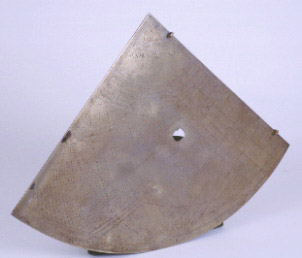
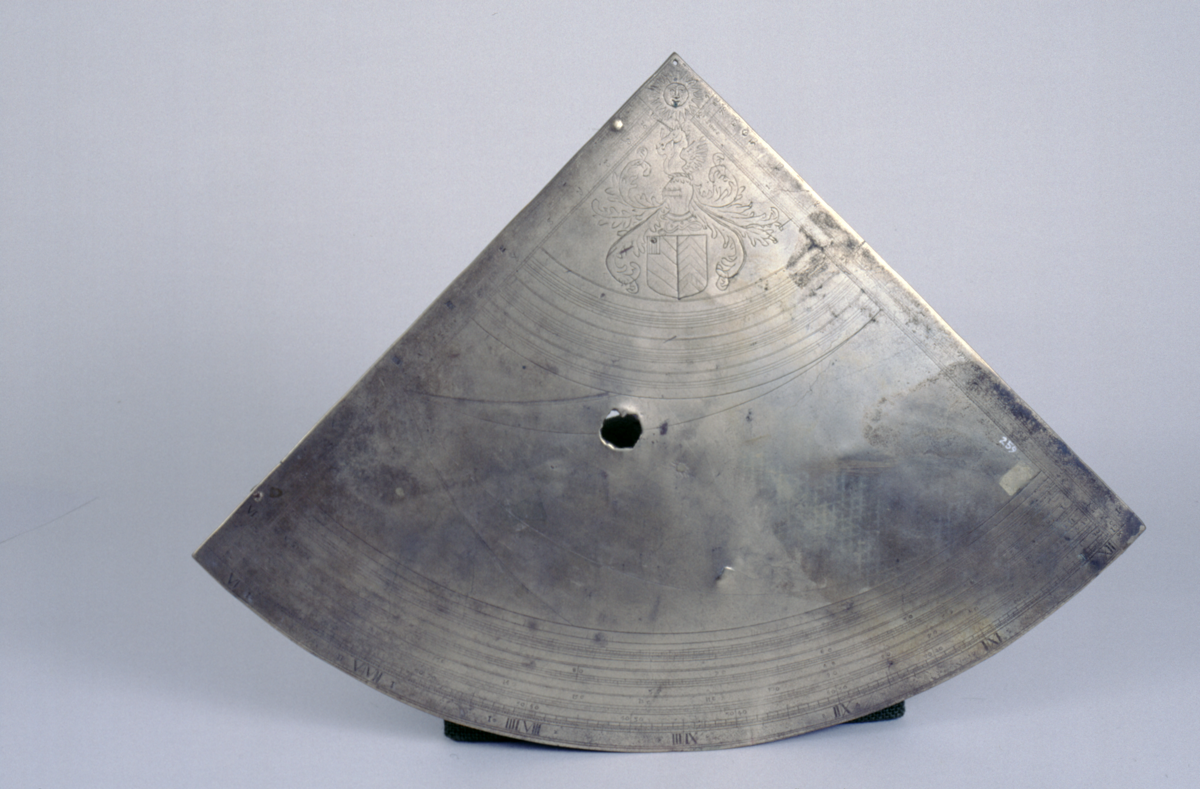
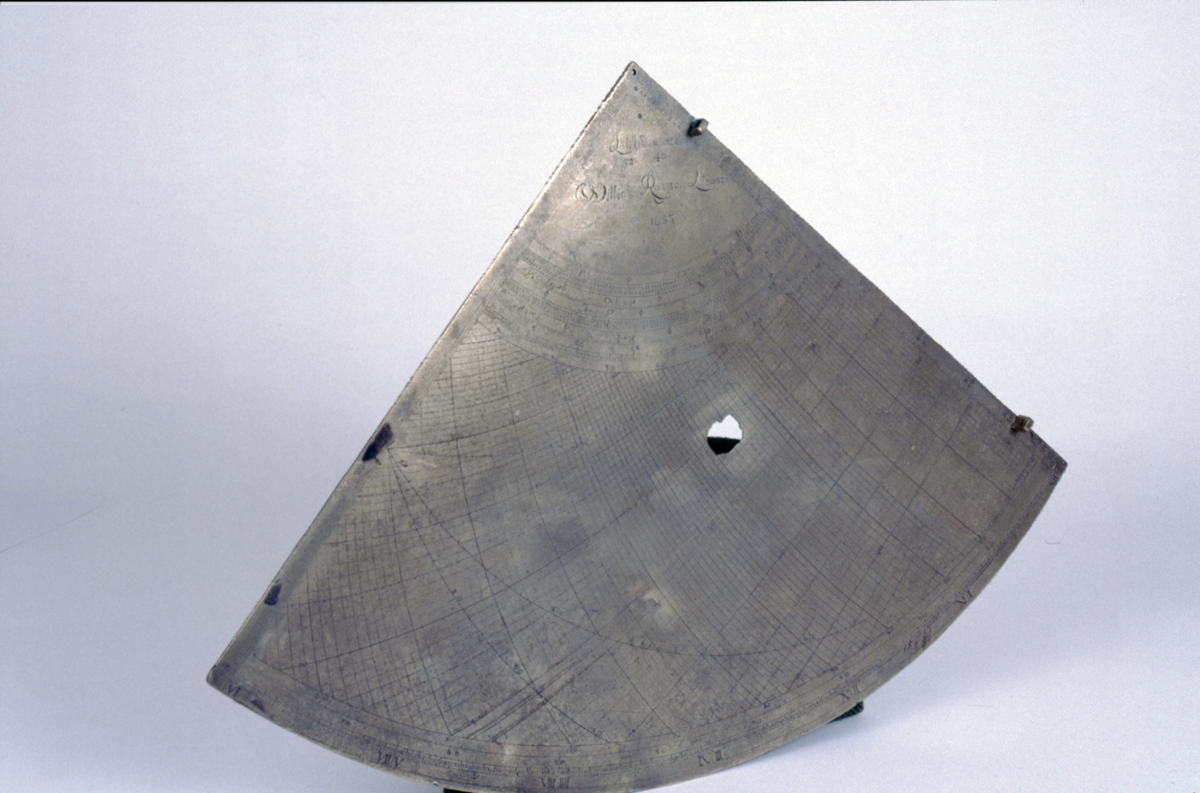
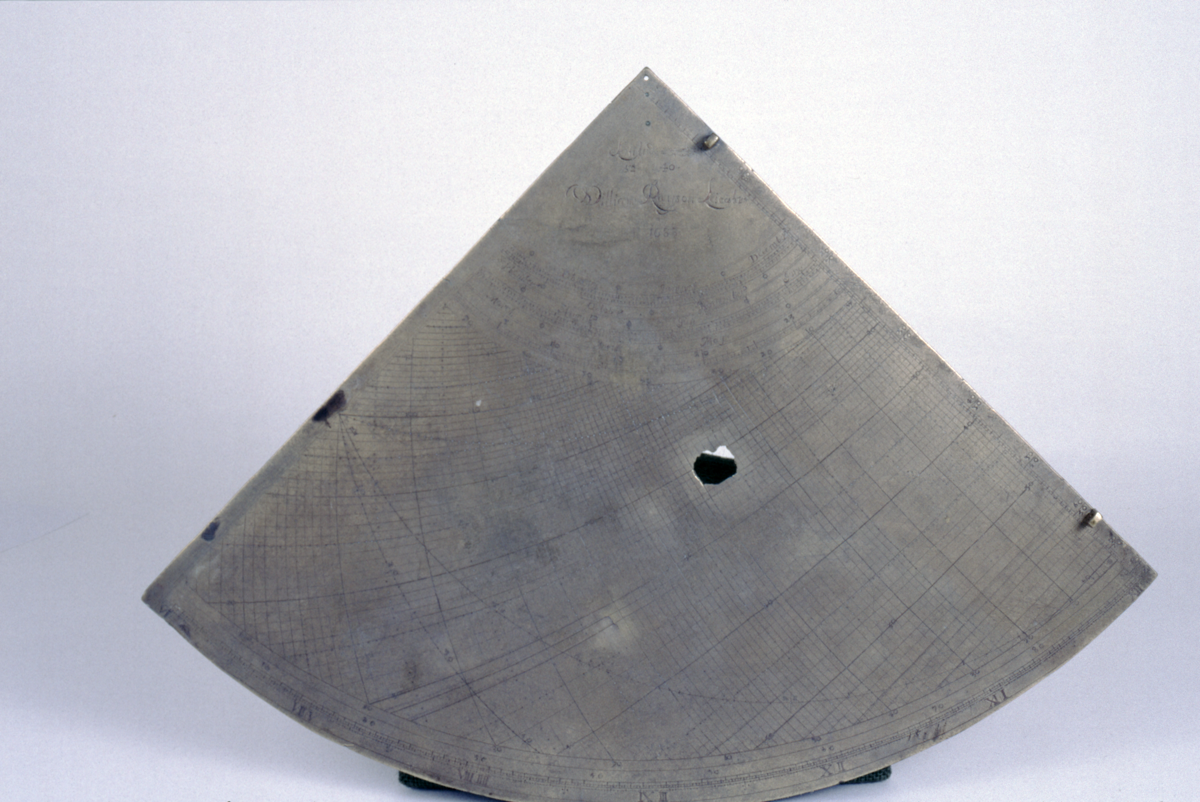
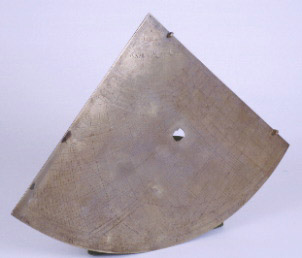
Sutton-type horary quadrant, by William Rayson, English, 1683
Origin
Leicester; England
Maker
Rayson. William
Class
dials
Earliest Date
1683
Latest Date
1683
Inscription Date
1683
Material
metal (brass)
Dimensions
311 mm radius
Special Collection
Provenance
This object was briefly allocated the accession number 0237. According to the entry in the accession register at this number, it was found in the collection with no number or record in 1973. Its association with the original Whipple collection is therefore uncertain.
Inscription
‘Latitude
52 40
William Rayson Leicester
1683’
Description Notes
Obverse: projection for 52˚ 40´. On the right hand edge a scale of ?sines and ?versines divided [0] - 90˚ in both directions, numbered by 10˚. Date scale divided to named month, subdivided to 1 day. Associated declination scale divided [0] - [23˚ 30´], numbered by 5˚, subdivided to 15´ (1st Aries March 10). Circumference calibrated with a scale of hours divided VI - XII, numbered by I, subdivided to 1 minute; also a degree scale divided [0] - 90˚, numbered by 10˚, subdivided to 15´. Projection with curved altitude parallels divided 10˚ - 0 - 60˚, numbered by 10˚, subdivided to 1˚. Horizon arc divided [0] - 40˚ and [90˚] - [130˚], numbered by 10˚, subdivided to 1˚. Ecliptic arc divided to zodiac sign, subdivided to 1˚.
Reverse: right hand edge carries a scale of ‘chords’ divided [0] - 90˚, numbered by 10˚, subdivided to 1˚; scale of ‘latitudes divided 0 - 90˚, numbered by 10˚; scale of ‘sines’ divided 0 - 90˚, numbered by 10˚. Left hand edge carries scale of ‘Houres’ divided I - VI, numbered by I, subdivided to 5´; scale of versed sines divided [0] - 180˚, numbered by 10˚. Circumference divided VI - XII, numbered by I, subdivided to 1 minute. (see history file).
fair condition, has a hole in the middle
References
Events
Description
Quadrant
A quadrant is a quarter of a circle, and there are different types of instrument that come under that description. The size of quadrants varied hugely from Tycho Brahe’s highly successful huge 2m radius one, to the more portable versions of the 18th century. In all examples it was important to keep movement, wear and flexure to a minimum, especially if results were to form part of an extended research program and to be compared with one another.
The quadrant was the principle measuring instrument of astronomy in the 17th and 18th centuries, being used in all major observatories. Plain sights (where the angle was simply read off by eye) were replaced by telescopic sights in more sophisticated examples.
18/10/2002
Created by: Saffron Clackson on 18/10/2002
FM:39989
Images (Click to view full size):