Accession No
0876
Brief Description
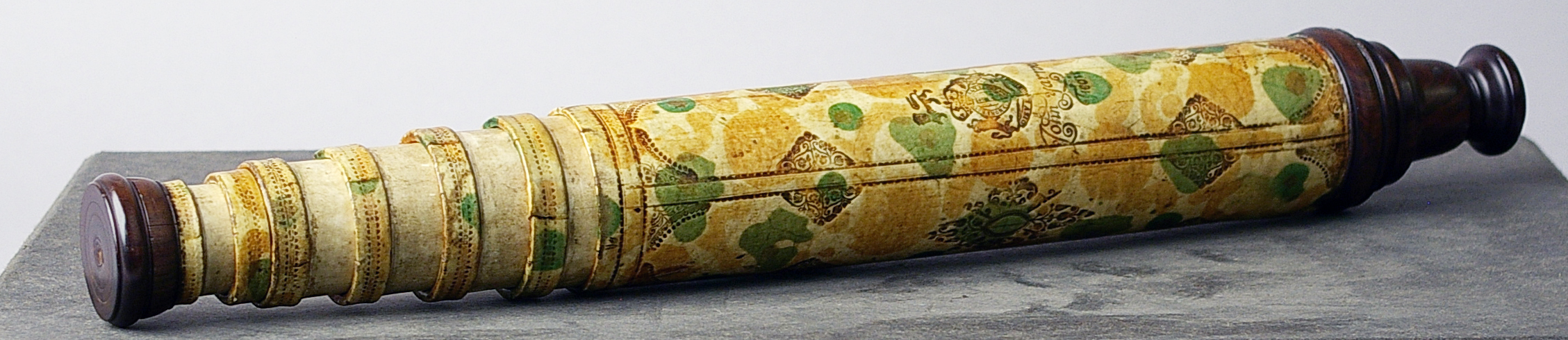
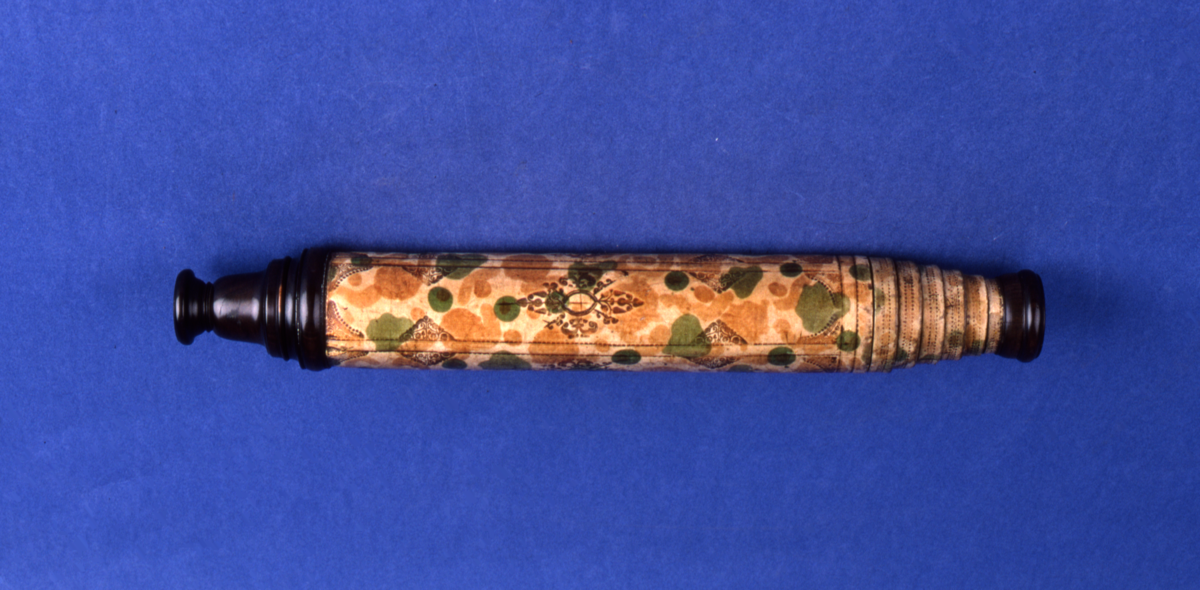
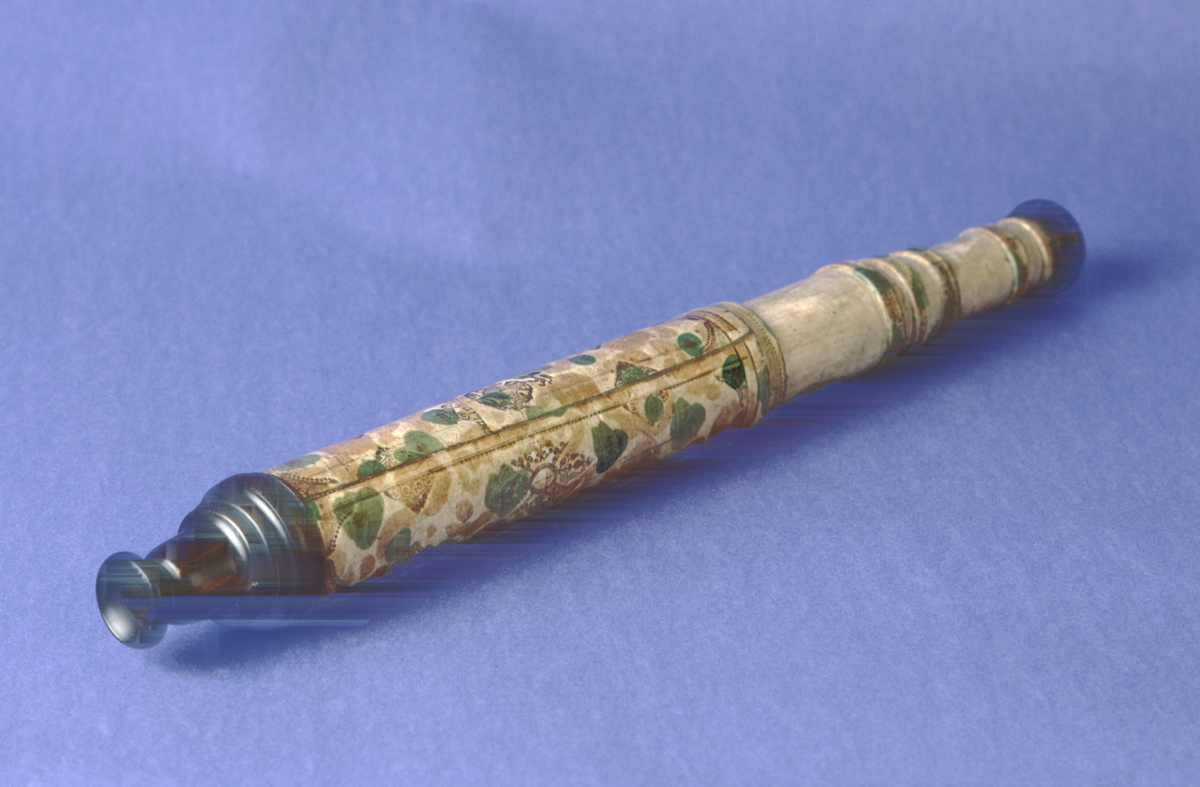
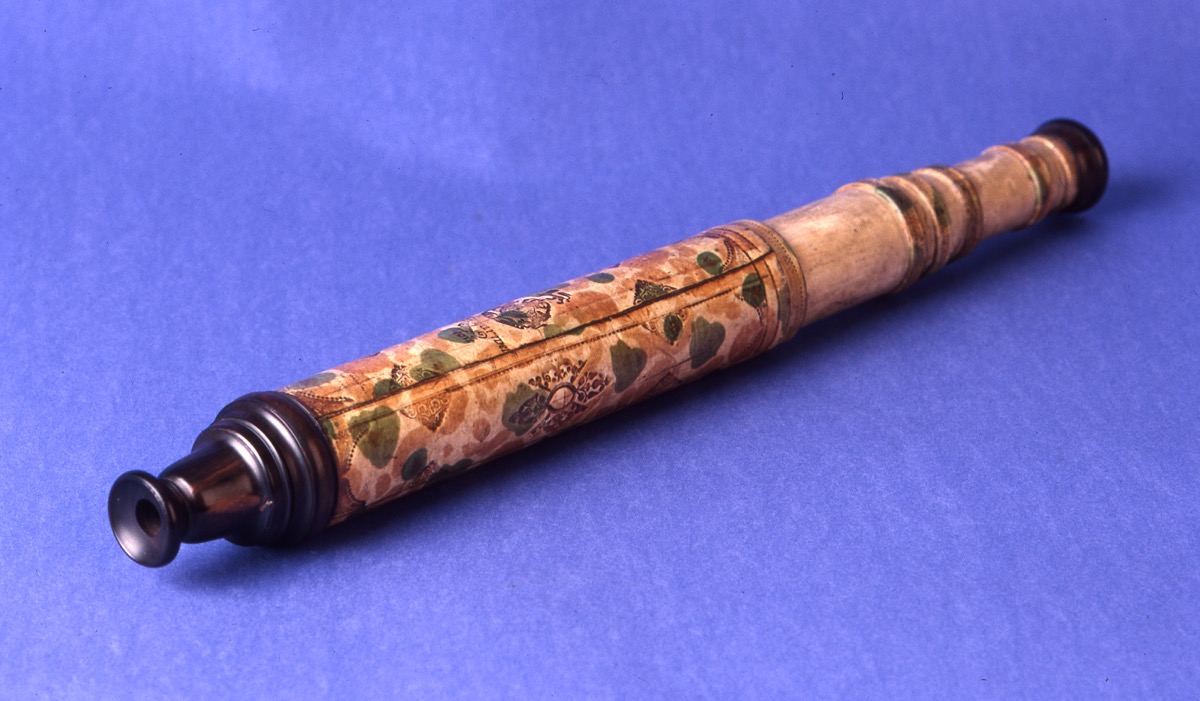
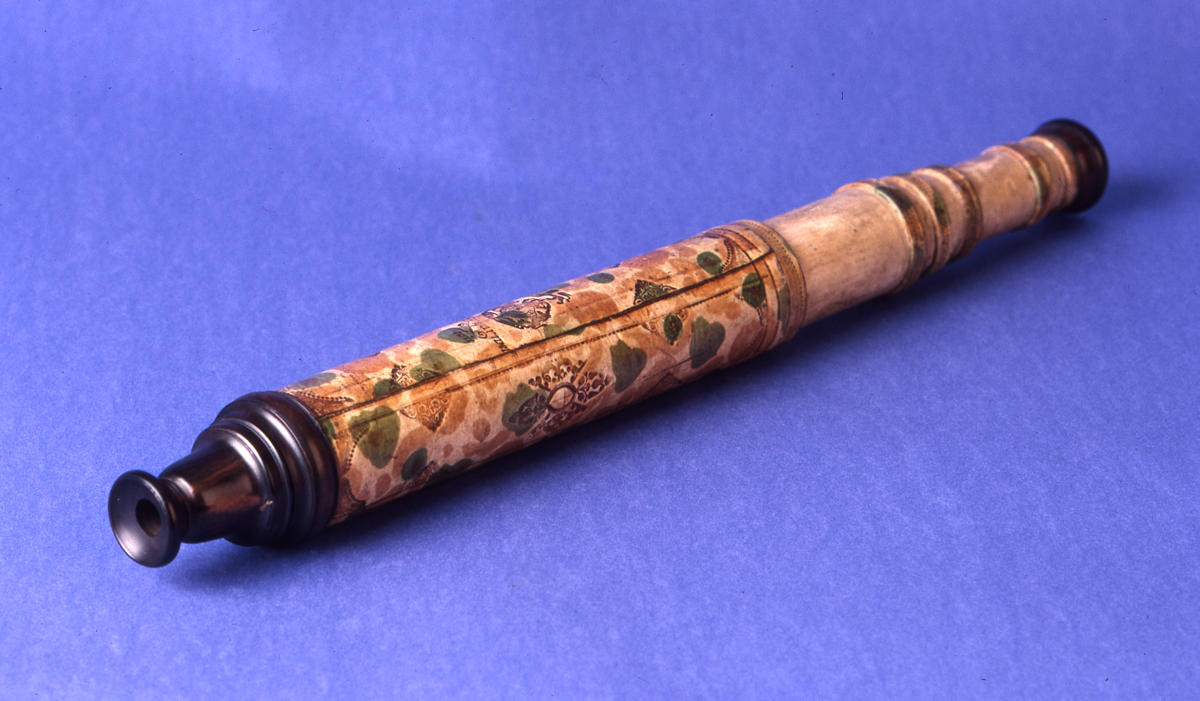
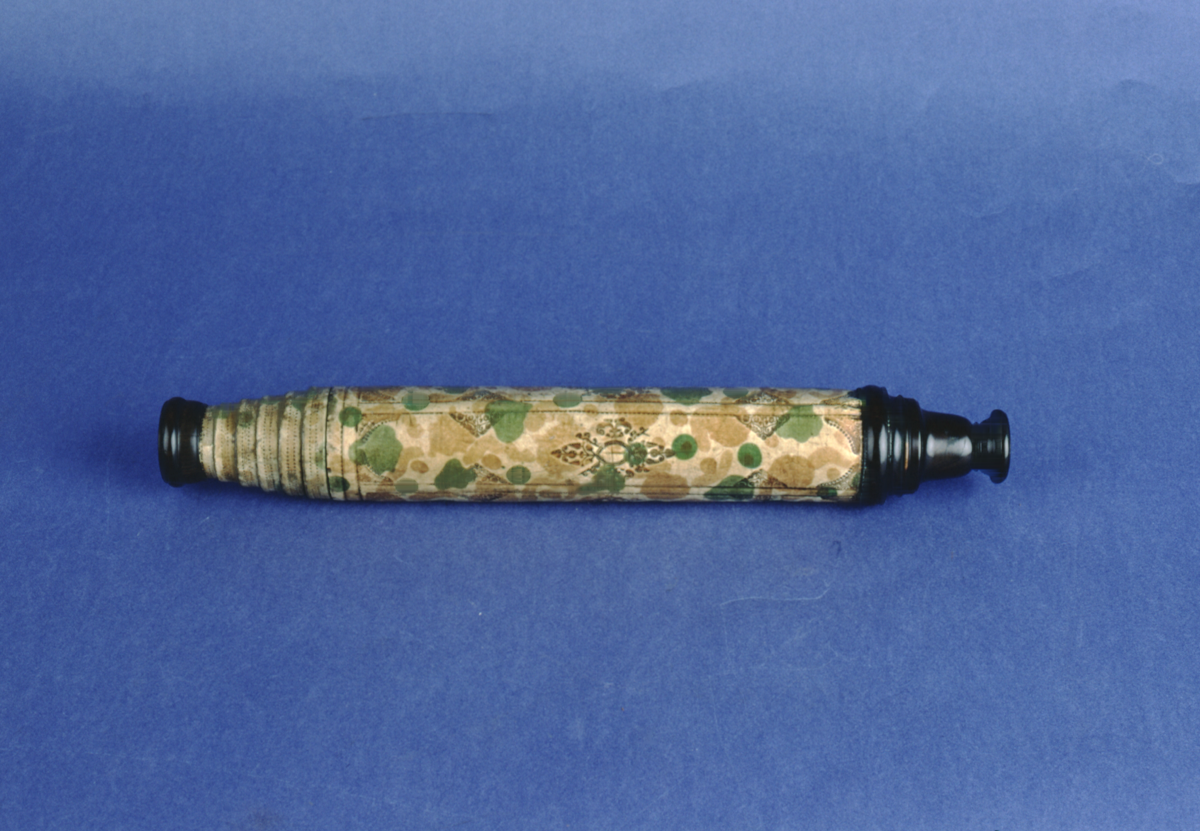
six-draw refracting telescope, by John Yarwell, English, late 17th century
Origin
London; England
Maker
Yarwell, John
Class
astronomy; optical
Earliest Date
1671
Latest Date
1708
Inscription Date
Material
wood; hide (vellum); paper (pasteboard); metal (gold); glass
Dimensions
length closed 366mm; diameter 42mm; aperture 18mm
Special Collection
Robert Whipple collection
Provenance
Purchased by Robert Stewart Whipple from T.H. Court, Harrow, England, on 13/06/1938.
Inscription
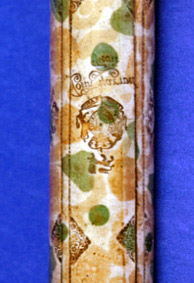
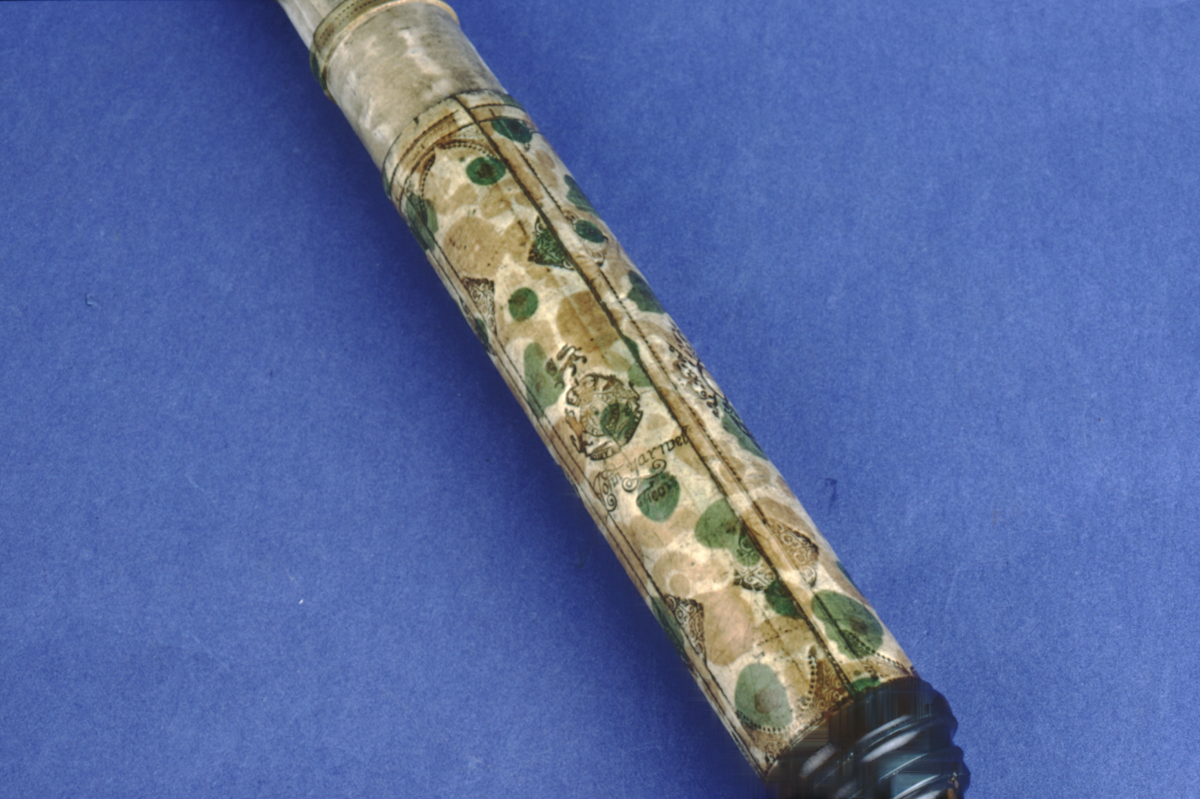
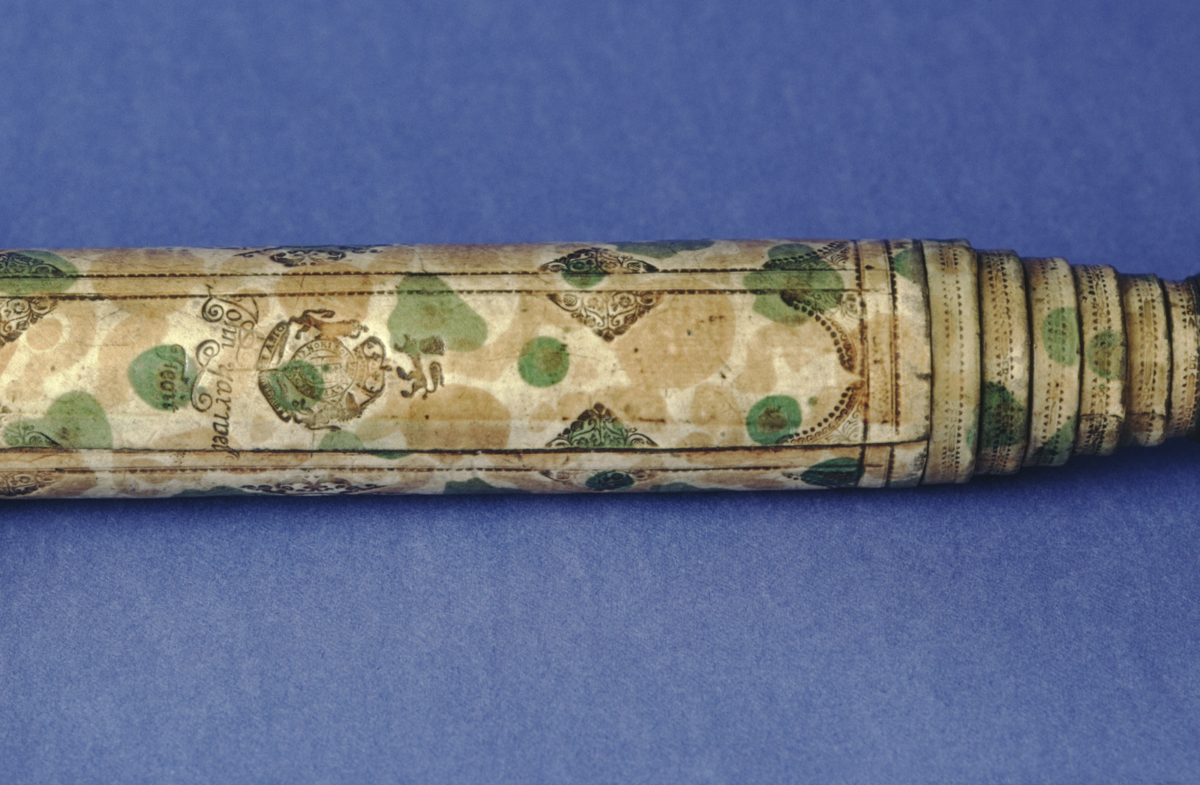
‘John yarwell
Fecit’ (stamped on barrel)
(also royal coat of arms)
Description Notes
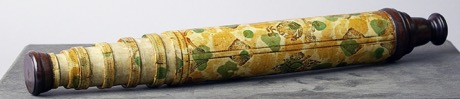
six-draw, reverse taper, hand-held refracting telescope, by John Yarwell, English, late 17th century.
Object glass in turned wooden mount (object glass loose in mount). Screw-on object glass cover. Cream vellum-covered draw tubes, bound with coloured vellum rings and marked with dotted rings for extension positions. Wooden inner rings at ends. Pasteboard body covered in vellum, Decorated with green and orange patches and gold tooling. 3 lens erecting eyepiece, lenses in wooden cells or mounts. 14 inches long when closed with wooden caps and 36 inches long when extended. The object glass has a clear aperture of 0.9 inches and a focal length of about 20 inches. Three similar lenses of 2.3-inch focal length, separated by 4.8 inchs, form the eyepiece. Magnification is x9. Screw-fit turned wooden eyestop.
Complete
References
Events
Description
The refracting telescope uses a lens to focus the observed image. Its exact origin is disputed, but it first appeared among Dutch spectacle makers at the beginning of the seventeenth century.
Great discoveries were made using the refracting telescope. Galileo’s work Siderius Nuncius (The Starry Messenger, 1610) describes his discoveries of the mountains on the moon, new stars and the moons of Jupiter.
John Yarwell was an English optician working in London from 1671 to 1708. Like most other opticians of the time, Yarwell also made telescopes, microscopes and thermometers. It was not unusual for opticians to make instruments such as these, which required highly ground lenses, as this was a skill that spectacle makers had acquired and developed in the course of their day to day work. Yarwell’s clients were wealthy and could afford optical instruments made with luxury materials such as the vellum with gold tooling used in this telescope.
Created by: Jenny Downes
FM:40113
Images (Click to view full size):