Accession No
0699
Brief Description
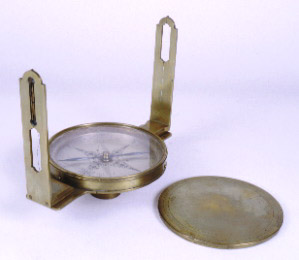
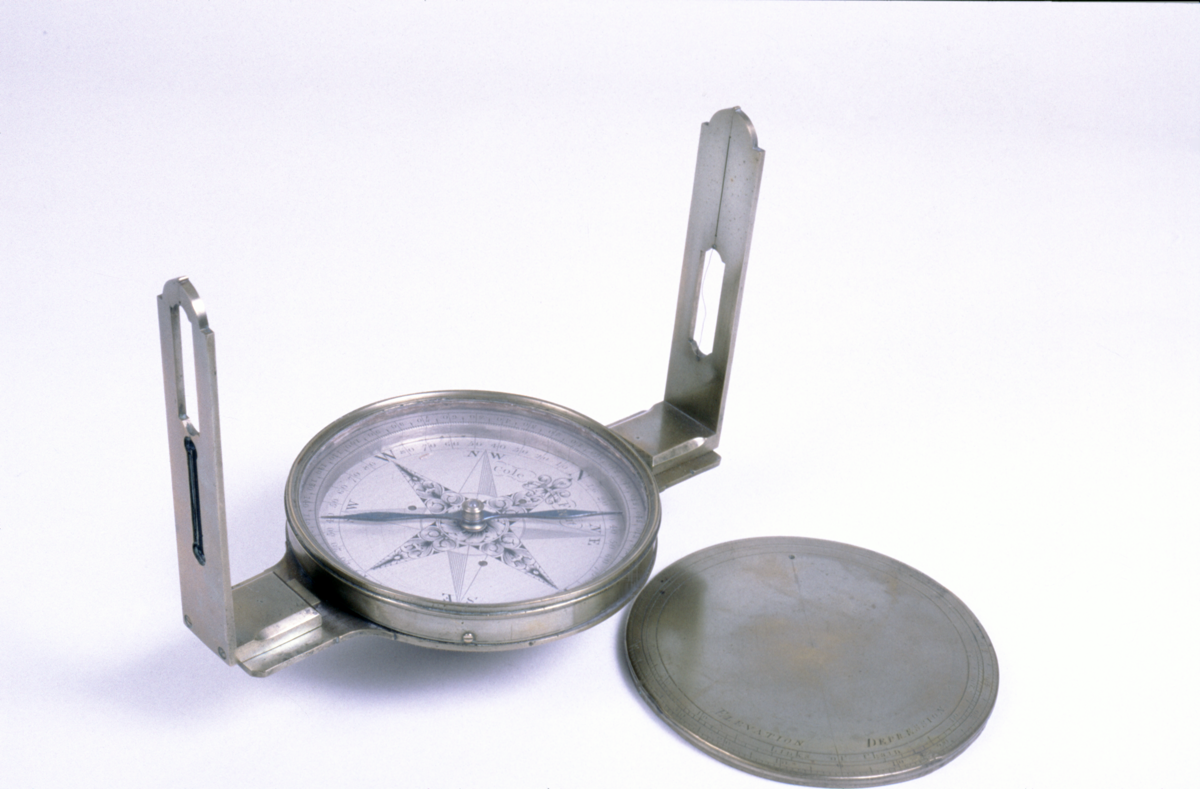
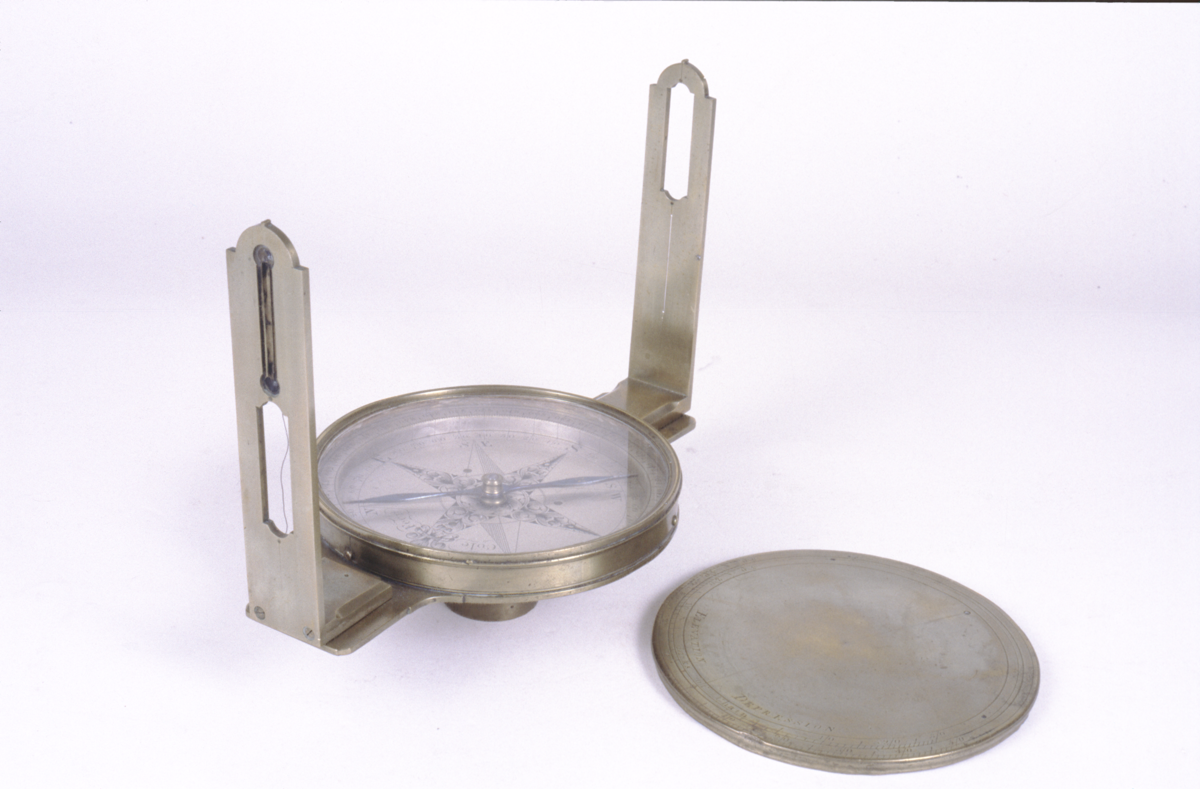
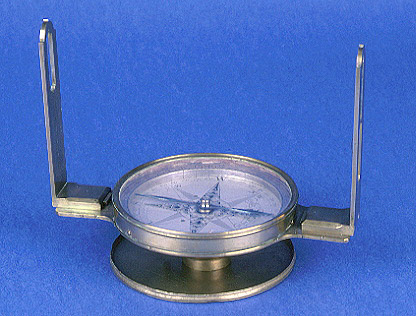
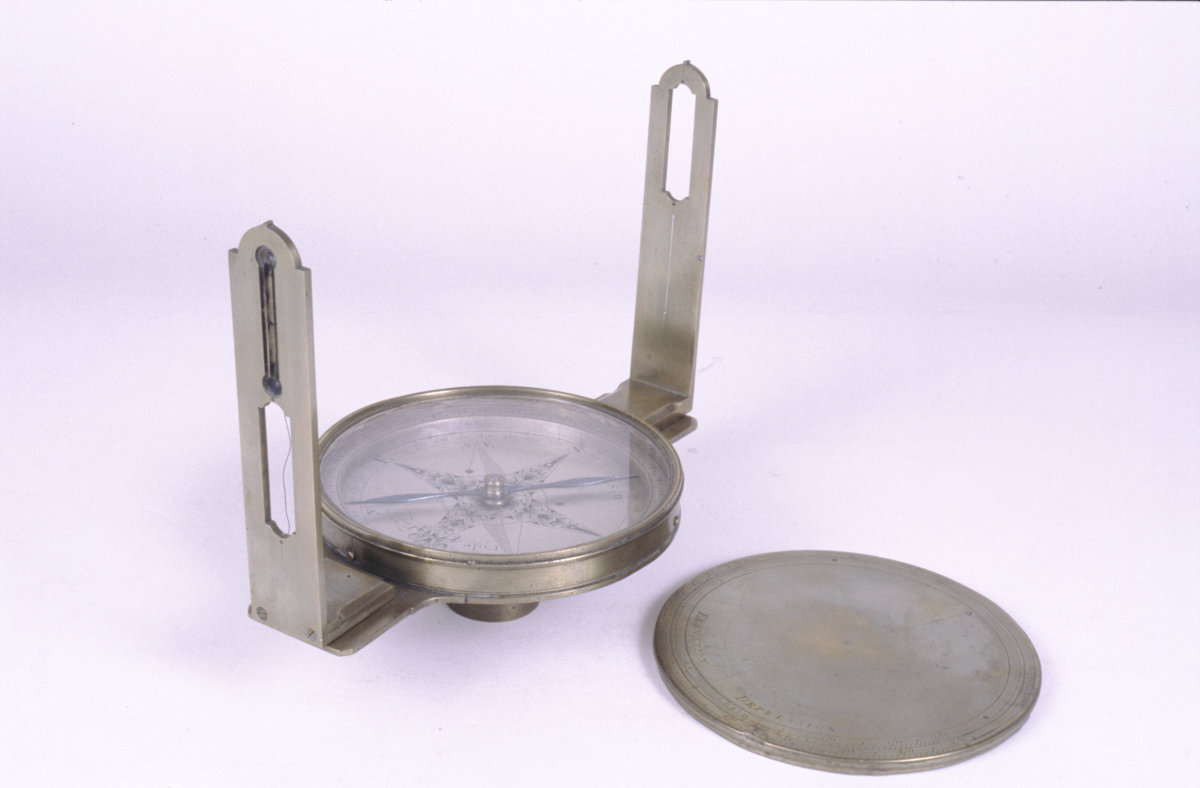
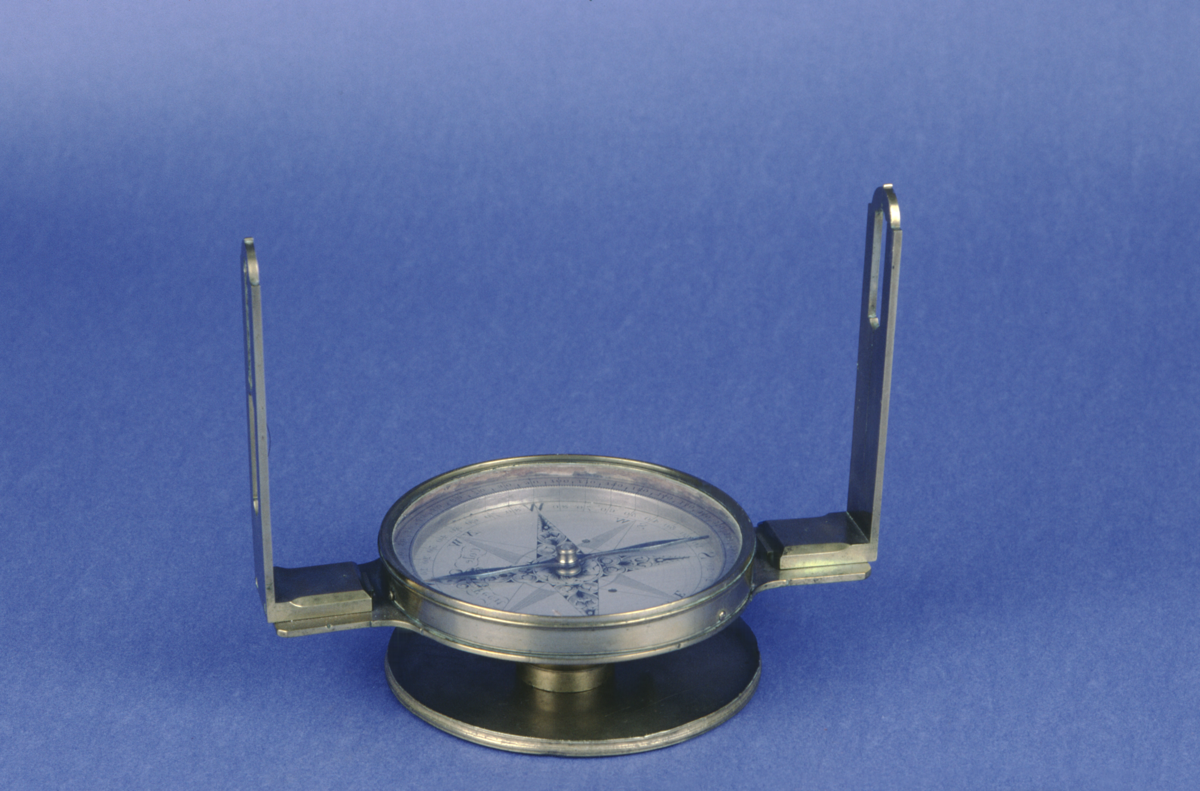
circumferentor by Benjamin Cole, English, 3/4 18th Century
Origin
England; London
Maker
Cole, Benjamin
Class
surveying
Earliest Date
1750
Latest Date
1775
Inscription Date
Material
metal (brass, steel, white metal); glass; rope (string)
Dimensions
length 212mm; compass diameter 126mm; height 170mm
Special Collection
Robert Whipple collection
Provenance
Purchased from T.H. Court on 02/03/1933.
Inscription
‘Cole Fecit’ (on compass)
Description Notes
Brass circumferentor. Silvered compass box with 8-point rose and blued steel needle. Fleur-de-lis to mark north. Lower degree scale divided [0] - [90] - [0] -[90] -[0] numbered by 10. UPPER SCALE DIVIDED [0] - 360˚ numbered by 10 subdivide to 1. Compass box mounted on limb which extends, supporting slot-on slit-and-window sights. Beneath compass are socket and clamp for attachment to tripod. Brass cover for compass box with scales of ‘Elevation’ and ‘Depression’, one scale divided 50˚ - 0 - 50˚ numbered by 10 subdivided to , second scale marked ‘Links of Chain’ divided 30 - 0 - 30 numbered by 10 subdivided to 1. Apperture for plumb-bob (missing).
Condition good; incomplete (plumb-bob missing)
References
Events
Description
In November 1944, R.S. Whipple’s donation to the University of Cambridge was put on show in the East Rooms of the Old Schools. The University accepted the donation on the condition that they found a new institution within which to house the collection.
Whipple himself wrote a guidebook to this exhibition, describing some of the more important objects and books on show. The front cover includes the following declaration: “The Exhibits are drawn from the Collection which Mr R.S. Whipple is presenting to the University and will form a nucleus for a History of Science Museum and Library in Cambridge.”
This circumferentor was one of the objects featured in the 1944 exhibition.
17/10/2025
Created by: Hannah Price on 17/10/2025
Description
The circumferentor is an instrument that derives from the reverse side of an astrolabe. It is used to measure horizontal angles, or vertical angles by suspending the instrument from its shackle.
The circumferentor was described by Arthur Hopton in 1611, though passing references had been made to it in earlier works. It became one of the standard pieces of equipment of the surveyor throughout the 17th and 18th centuries.
31/08/2006
Created by: updated by Ruth Horry on 31/08/2006
FM:40204
Images (Click to view full size):