Accession No
2295
Brief Description
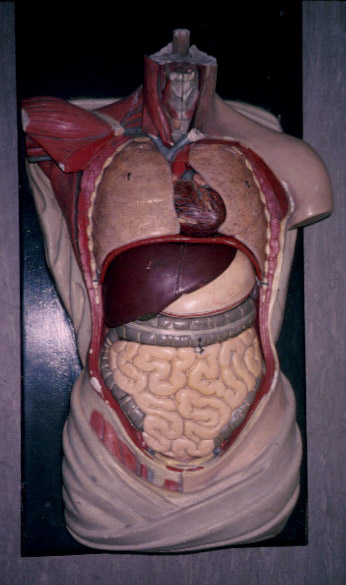
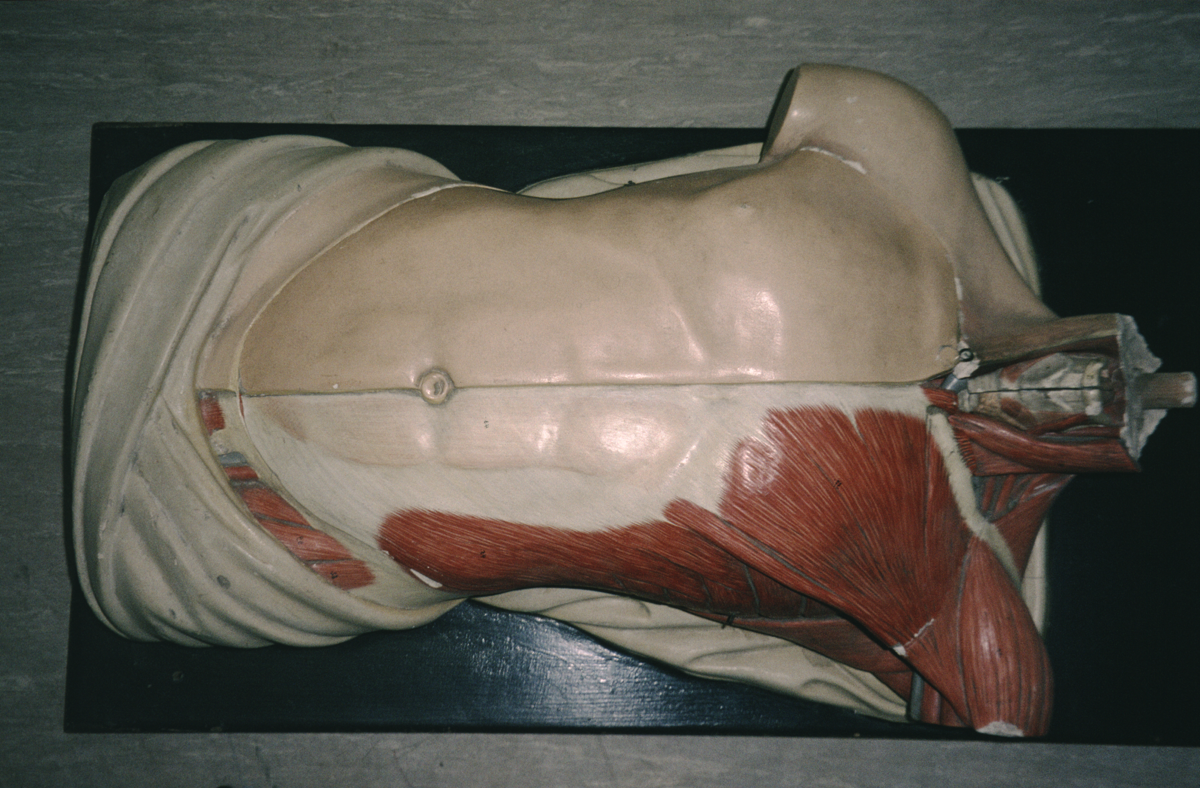
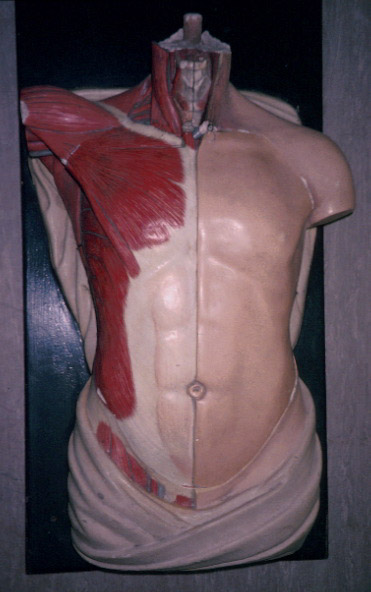
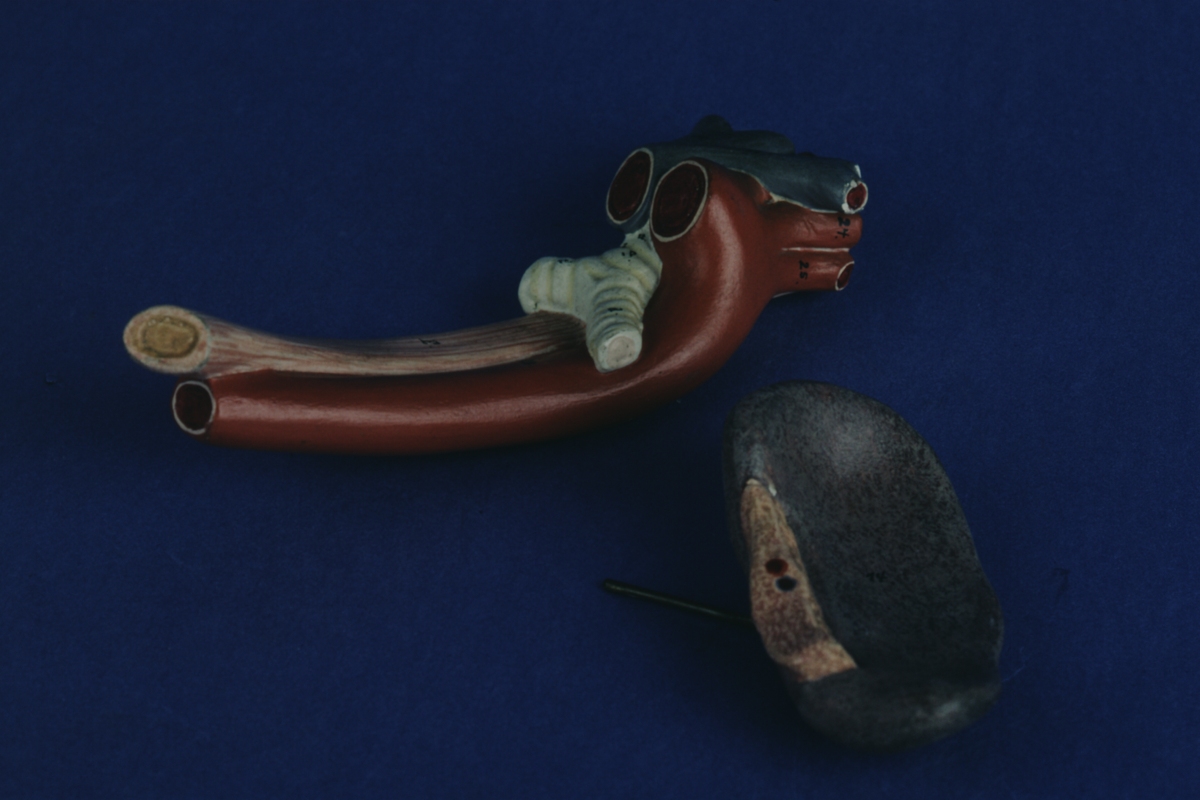
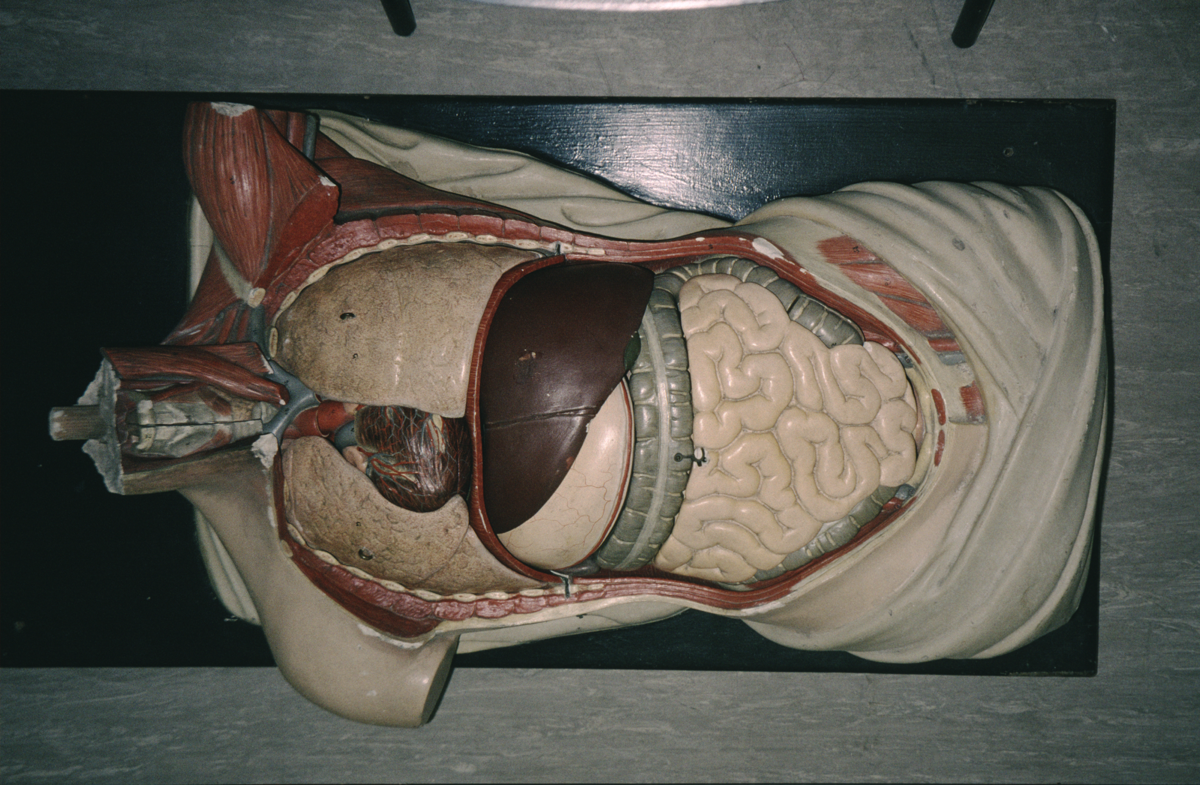
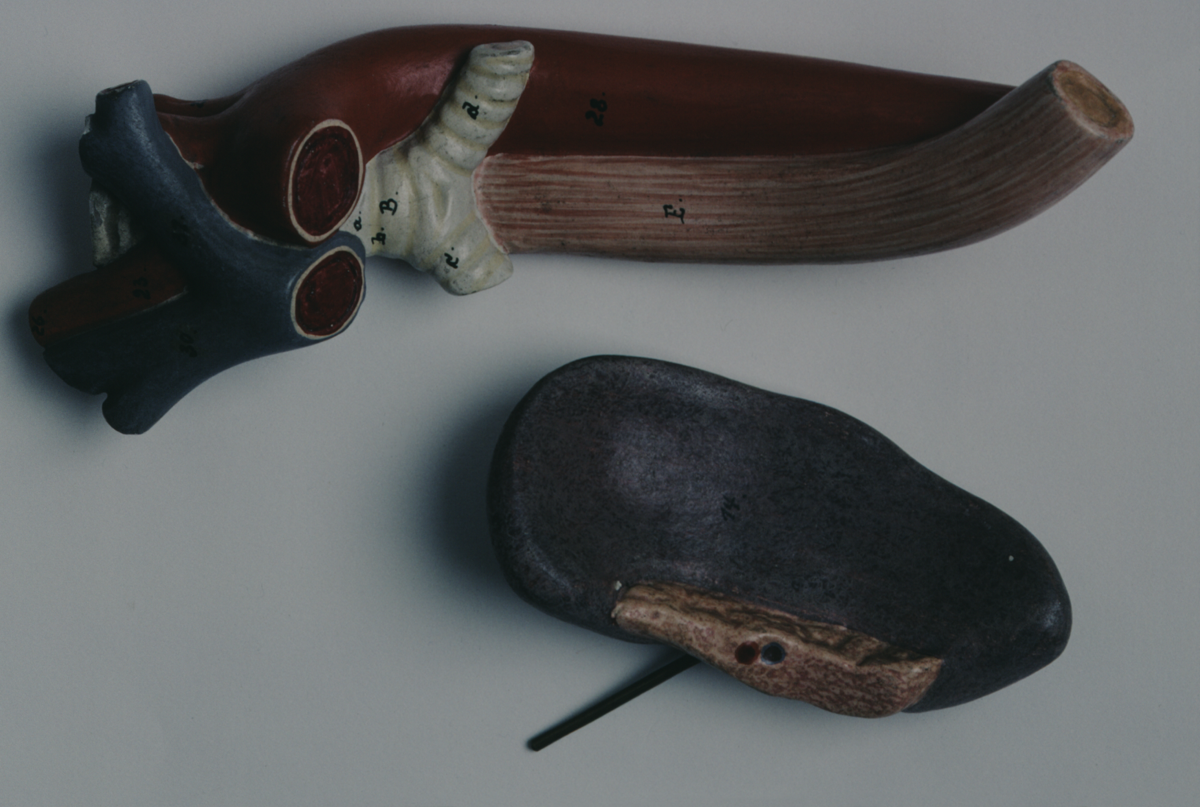
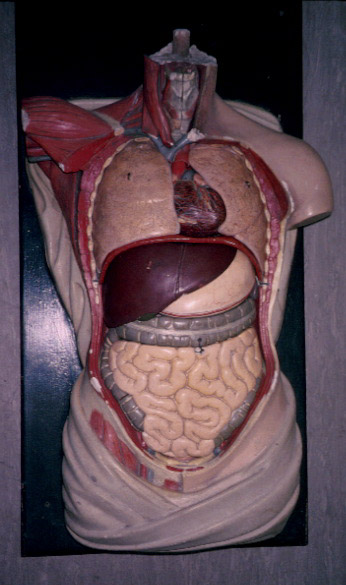
anatomical model of a human torso, Museum name ‘Fred’, 19th Century
Origin
Maker
Class
biology; physiology; demonstration
Earliest Date
1800
Latest Date
1900
Inscription Date
Material
wood; metal; plaster
Dimensions
torso length 800 mm, height 250 mm; base 950 x 465 mm;
Special Collection
Provenance
Purchased from Magdalene Street Gallery, Cambridge, England, 16/2/1977.
Inscription
Description Notes
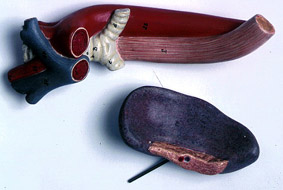
Anatomical model of a human torso, known as ‘Fred’. Plaster model, possibly on a wood and metal framework; various pieces fitting inside the abdominal and chest cavity. On black painted wood base.
Condition: fair (some cracking to the plaster); some of the metal hooks and eyes to hold the pieces in position are missing.
References
Events
Description
Affectionately known by the Whipple Museum staff as ‘Fred’, this classic model of a human torso was used as a teaching aid. Until the 1870s, clinical training for medical students was available to only a select few. Confronted with a shortage of human remains for performing dissections, nineteenth-century model-makers began to produce life-like examples of anatomy that would support medical teaching. While anatomical models did not completely displace the value of observation through dissection, they were important objects for familiarizing and visualizing internal human anatomy. In contrast to an older generation of wax models that could not be disassembled, this model of a human torso provided a systematic reconstruction of the human body.
18/02/2014
Created by: Allison Ksiazkiewicz on 18/02/2014
FM:40306
Images (Click to view full size):