Accession No
3113
Brief Description
prism train for spectroheliograph, by Adam Hilger, English, c. 1905
Origin
England; London
Maker
Adam Hilger [prism 2]
Class
optical
Earliest Date
1901
Latest Date
1905
Inscription Date
Material
glass; paint; wood; metal (steel, brass, another)
Dimensions
prism 2: height 173mm; breadth 174mm; depth 135mm other non-triangular prism height 168mm; breadth 131mm; depth 150mm holder for prism length 445mm; breadth 180mm; height 250mm box length 485mm; breadth 220mm; height 265mm box 2 length 430mm; breadth 350mm; height 295mm triangular prism depth 191mm; breadth 160mm; height 167mm
Special Collection
Provenance
Transferred from Institute of Astronomy, University of Cambridge, Cambridge, England, 12/1983. Part of spectroheliograph which was given to the SPO, Cambridge by the SPO, South Kensington in 1913.
Inscription
‘REFIGURED
BY
A.H.’ (top of prism 2)
Description Notes
Prism train for spectroheliograph, by Hilger, English, c. 1905.
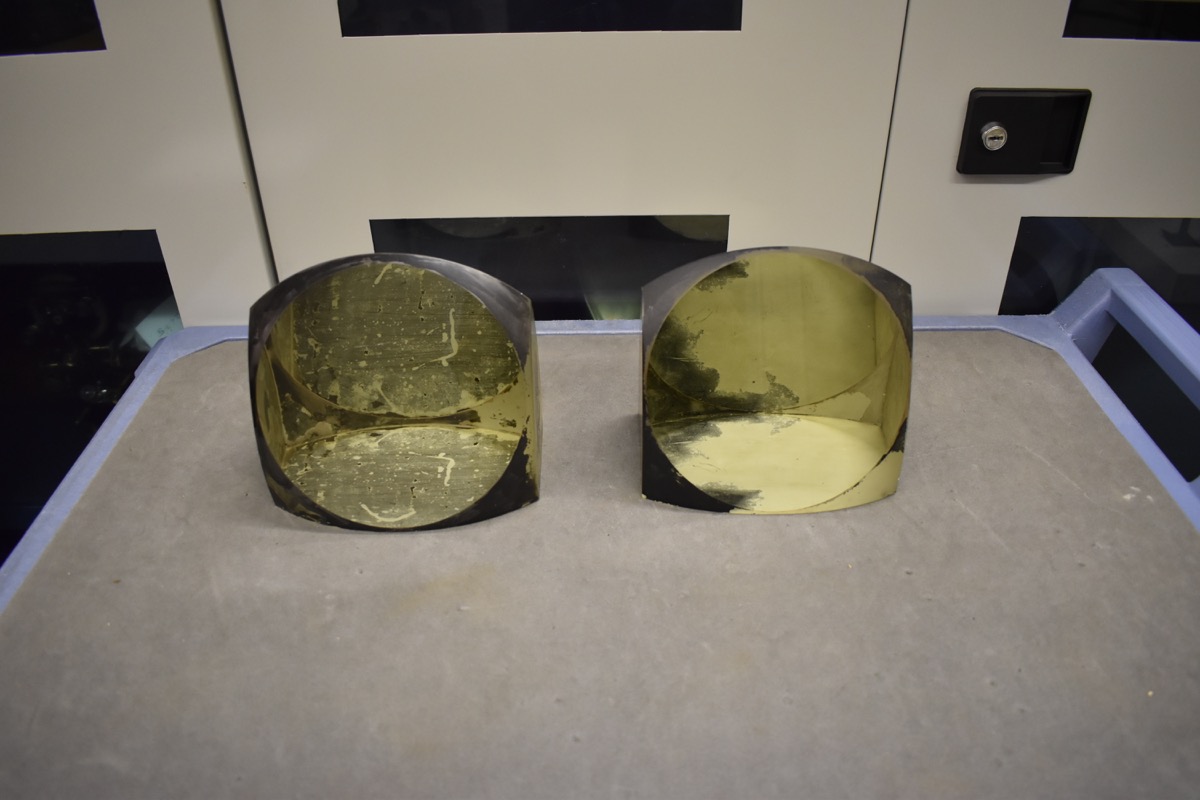
Four prisms for spectroheliograph; two triangular, two with oval faces; each has one face silvered for reflection of light. Top and bottom painted with black paint.
Black-painted metal holder for triangular prisms with brass mounting pieces on the sides.
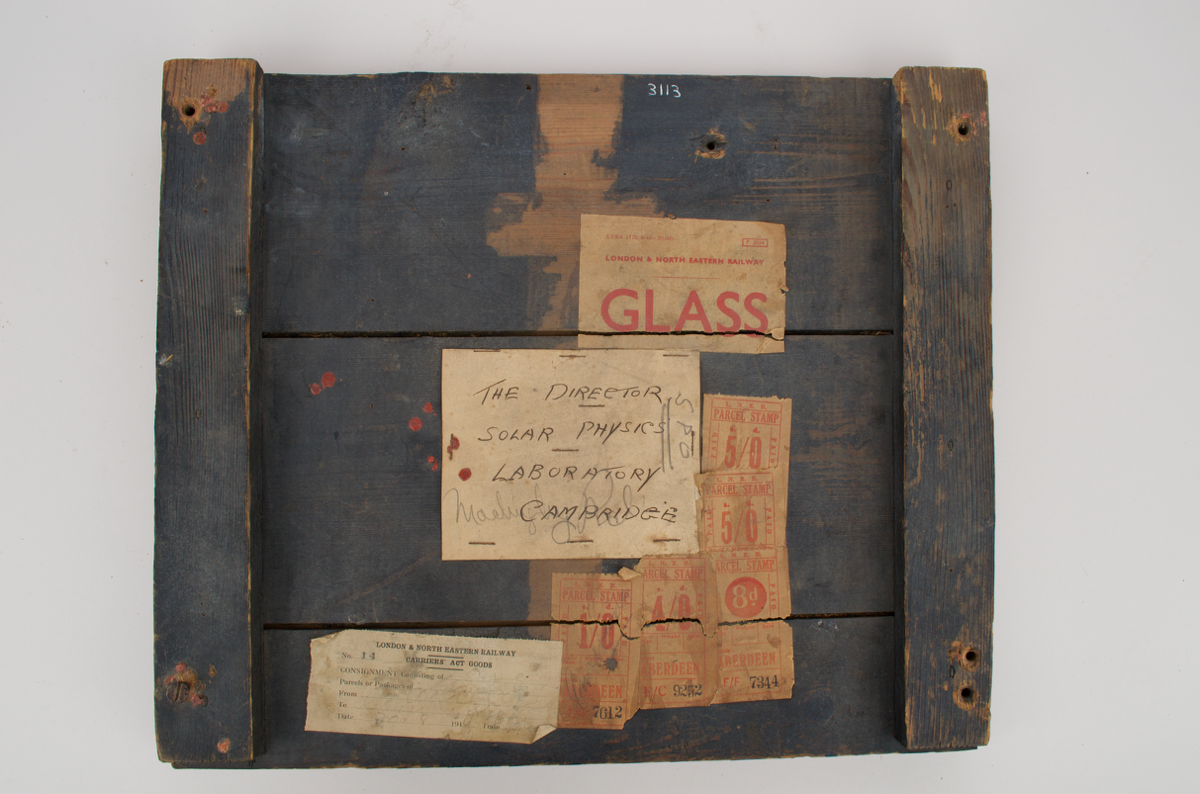
Two wooden crates for transportation of prisms; one holds both triangular prisms, the other is empty. The latter is marked ‘Case for 6´´ 45˚ Hilger Prism used Canada Aug 1932’.
Condition good; complete.
References
Events
Description
Prism
A prism consists of a translucent piece of glass or crystal, usually triangular in cross section, which is used to separate light into a spectrum of its separate colours.
The instrument works because different wavelengths of light are refracted (bent) by different amounts as they enter and leave the prism; the shorter wavelengths (towards the blue end of the spectrum) are refracted by the greatest amount, and the longer wavelengths (towards the red end) are refracted the least. This spreads out normal white light, which is a mixture of all the different colours, into its constituent parts and produces the rainbow effect of a spectrum.
18/10/2002
Created by: Saffron Clackson on 18/10/2002
FM:40416
Images (Click to view full size):