Accession No
1947
Brief Description
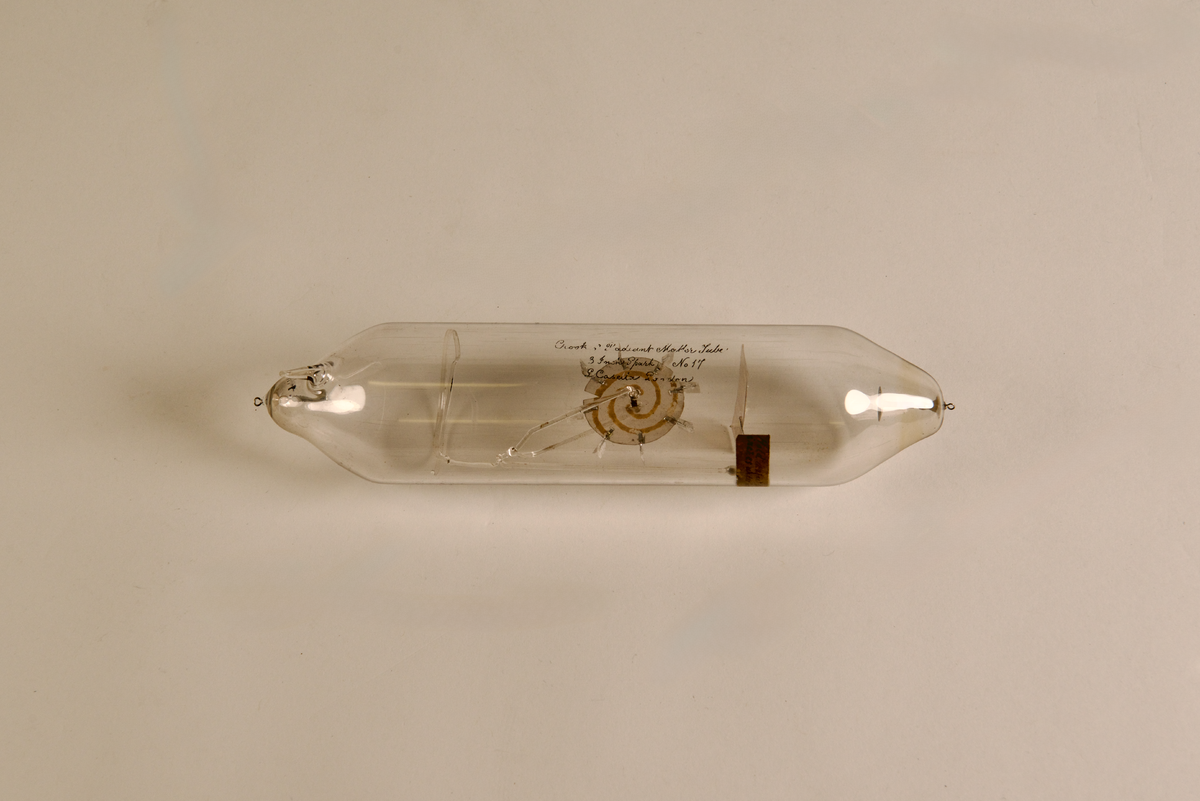
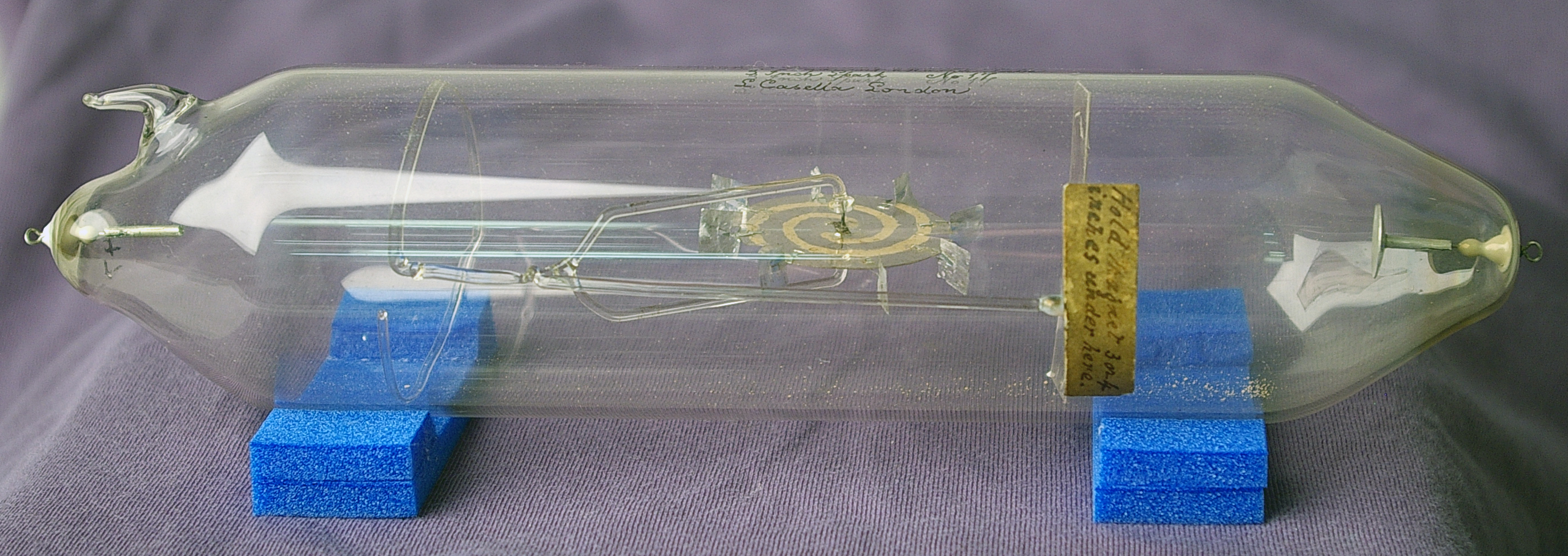
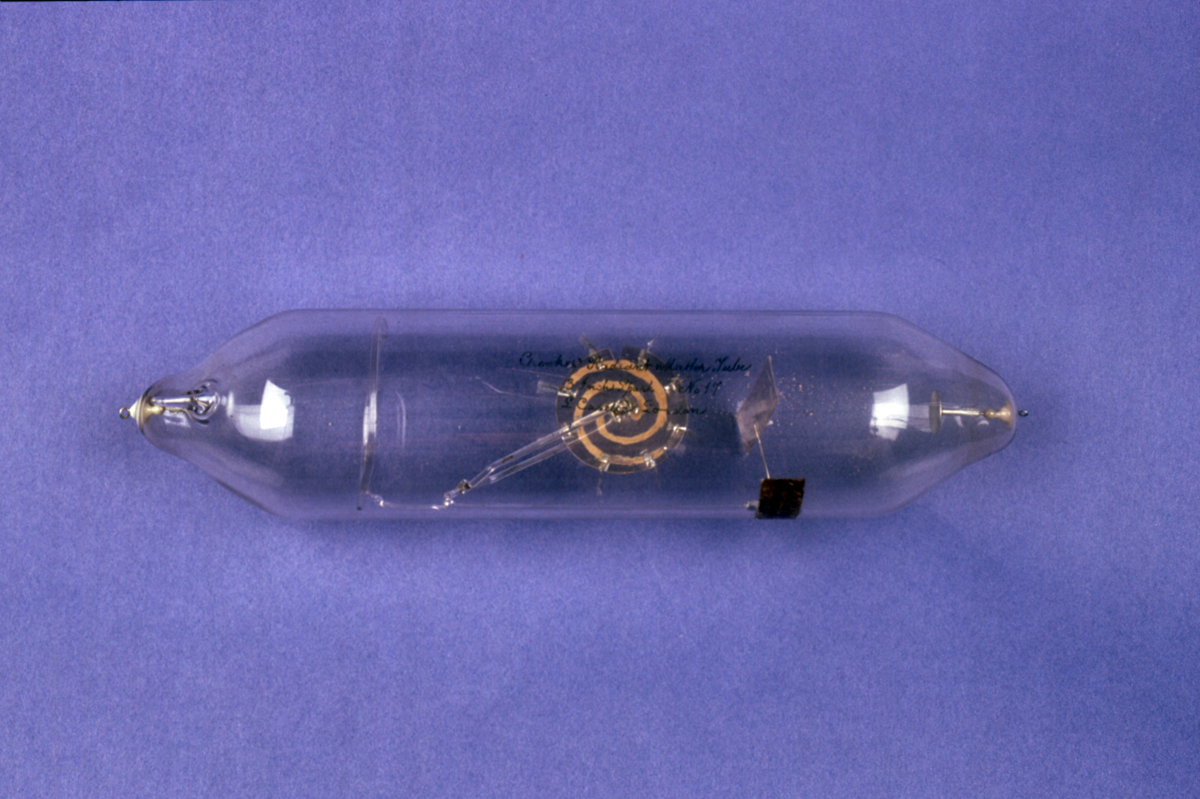
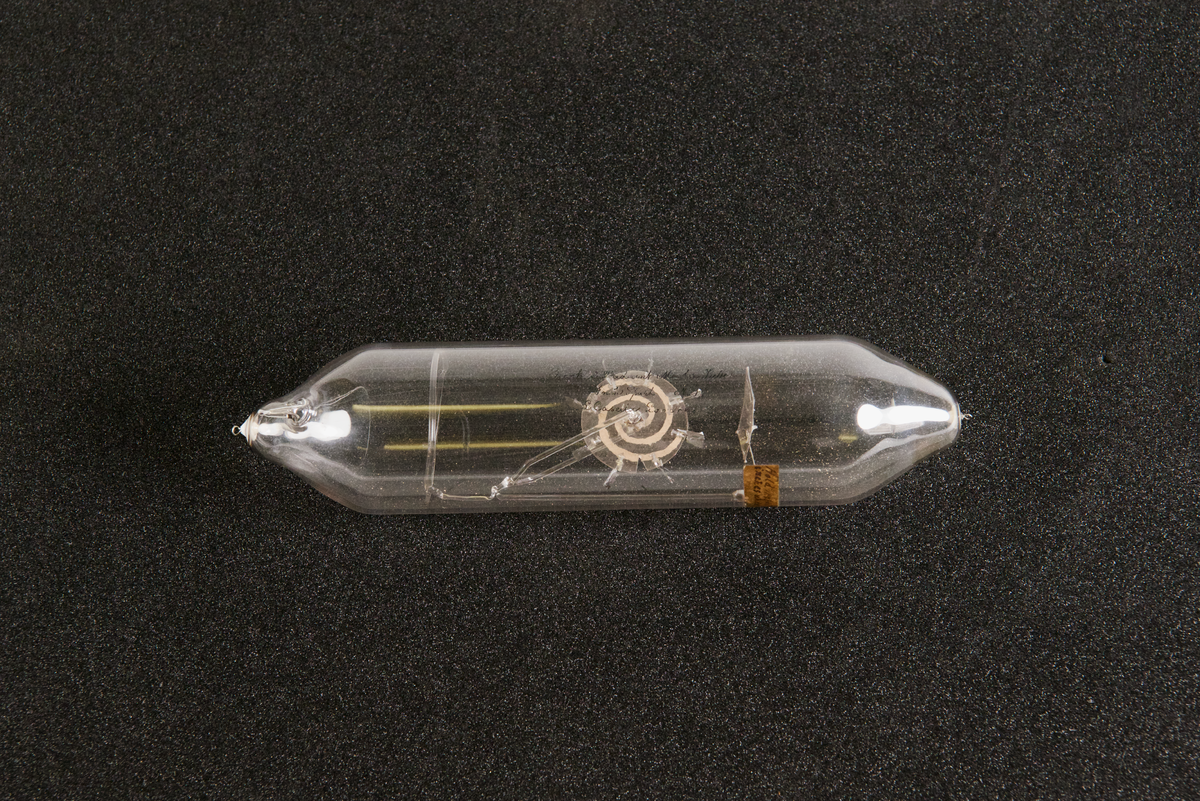
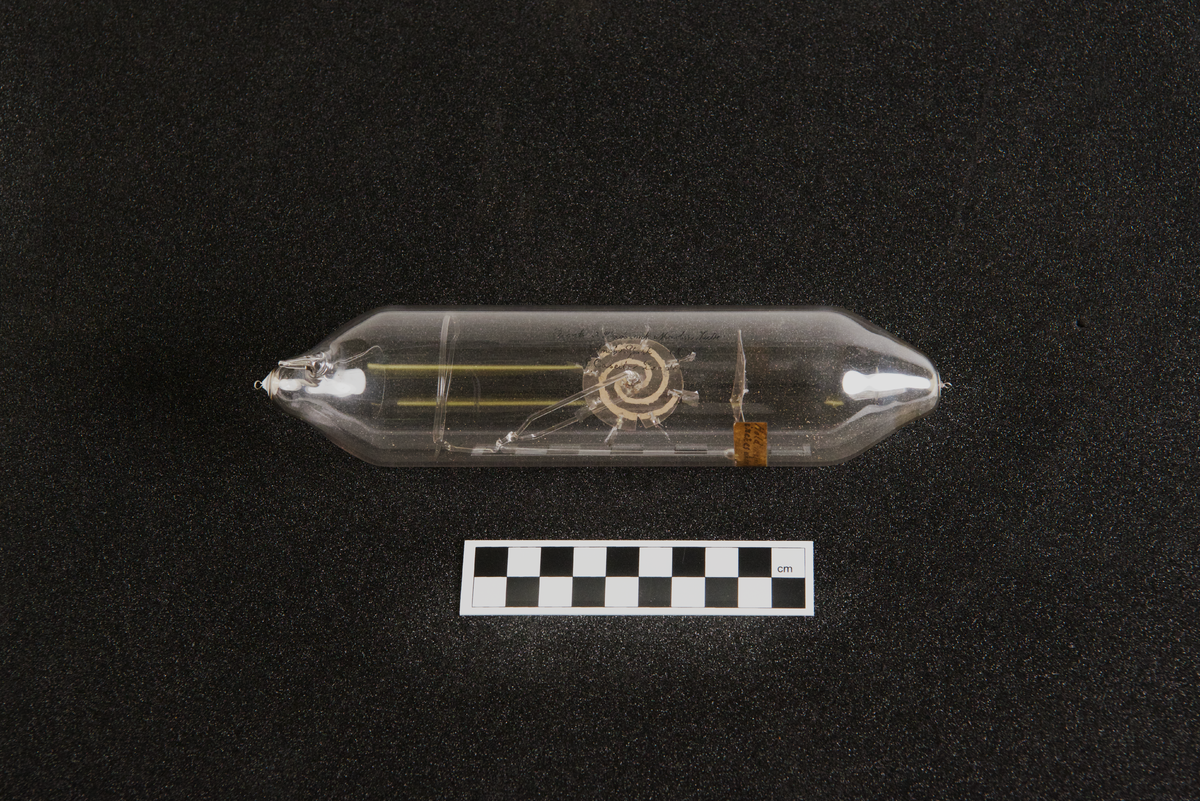
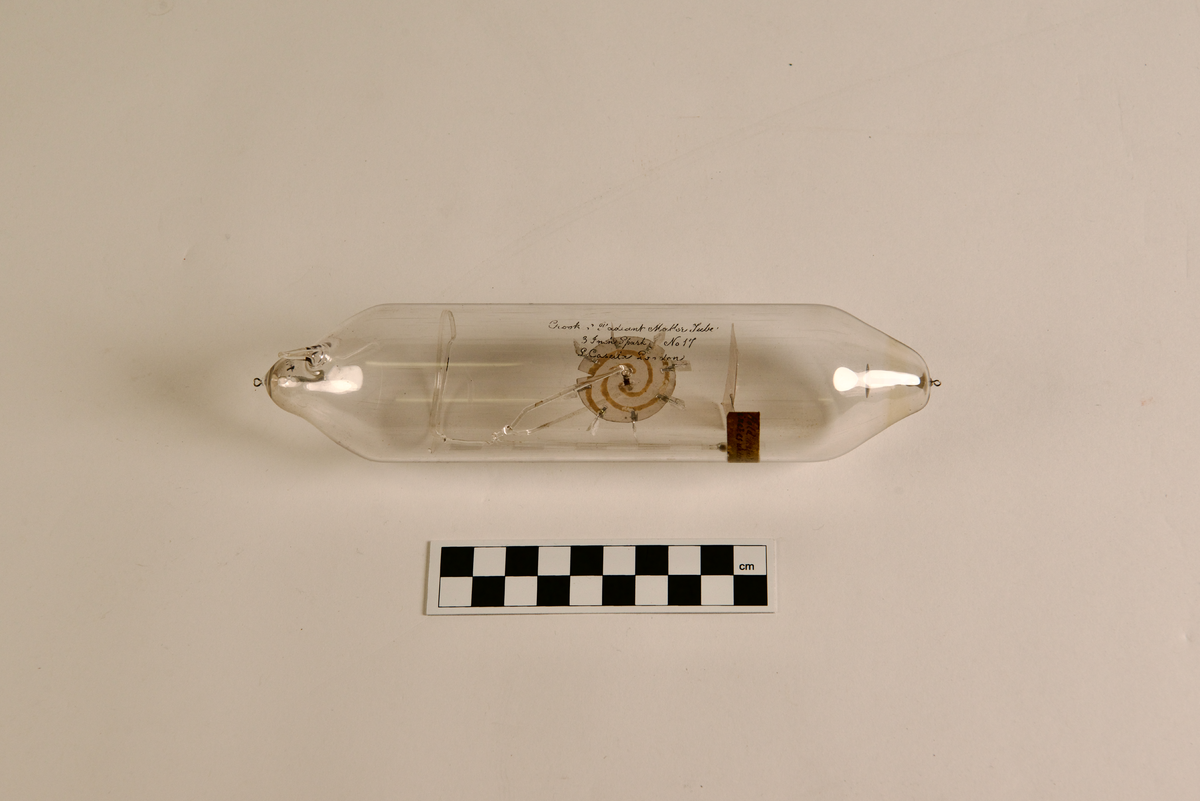
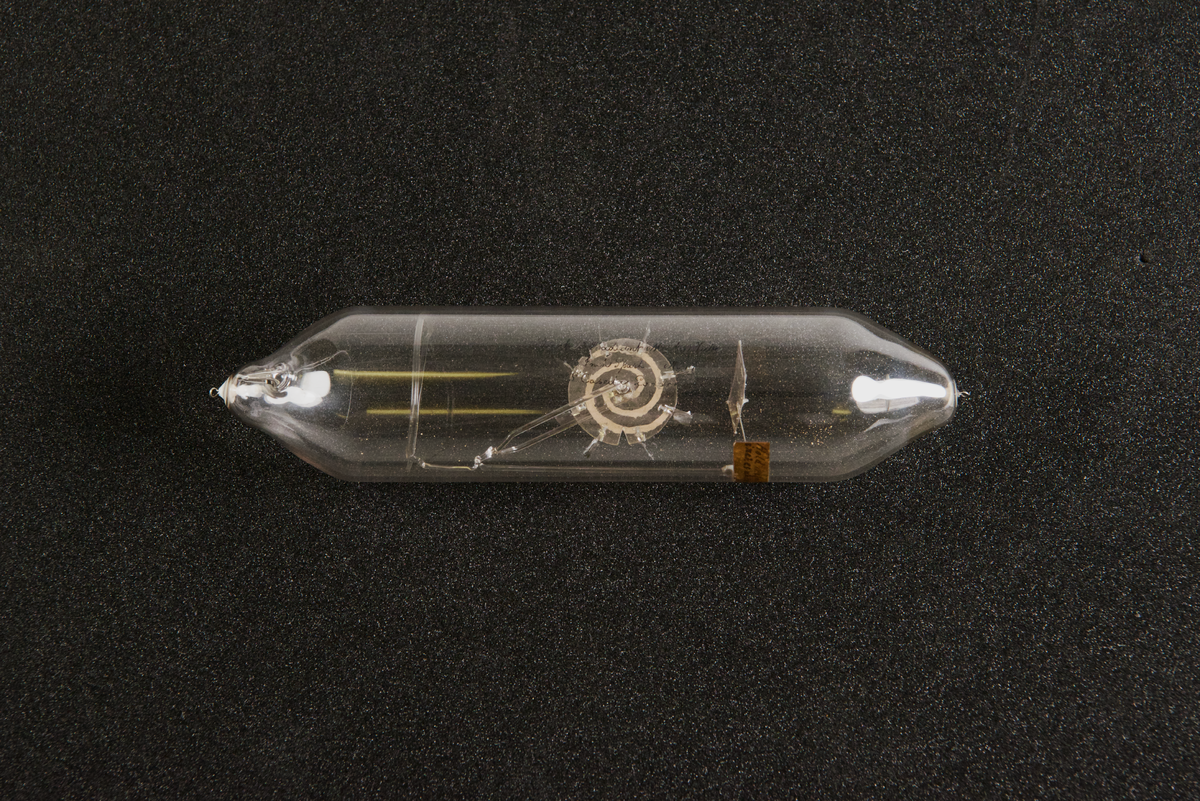
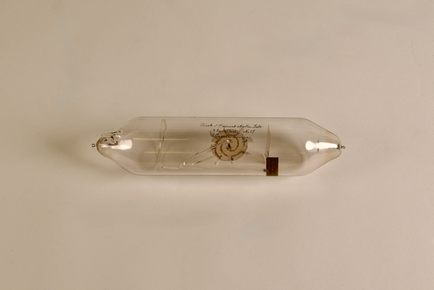
Crookes' radiant matter tube, by L. Casella, English, 1885 (c)
Origin
England; London
Maker
L. Casella
Class
physics
Earliest Date
1885
Latest Date
1885
Inscription Date
Material
glass; metal (aluminium?); stone (mica?); paper
Dimensions
length 210mm; maximum diameter 50mm
Special Collection
Cavendish Collection
Provenance
Transferred from the Cavendish Laboratory, University of Cambridge, in 1974.
Inscription
‘Crookes’ Radiant Matter Tube
3 Inch Spark No 17
L. Casella London’ (side of tube)
‘Hold magnet 3 or 4
inches under here.’ (paper label on tube)
Description Notes
Glass vacuum tube with aluminium (?) electrodes and central paddle-wheel which can be moved by the discharge and can also have its movement reversed by the introduction of a magnet. Wheel is glass (?) with mica (?) paddles.
Condition good; complete
References
Events
Description
If you create a glass vessel, empty it of air to create a vacuum, and connect it to an electric current, you'll see a mysterious blue ray running from the cathode (negative electrode) towards the anode (positive electrode) and create a green glow when it strikes the glass in the area of the anode. Investigating these mysterious glows would take physicists towards a greater understanding of the nature of matter itself.
In the 1870s, William Crookes found that at a high vacuum, cathode rays could push a miniature glass paddle-wheel along. Using a magnet to deflect the rays, the wheel can be moved backwards and forwards.
This tube was made by the company of London-based instrument maker Louis Casella (1812-1897), who is best known for his glass thermometers. It was used at Cambridge's Cavendish Laboratory of Experimental Physics at a time when Cavendish Professor J.J. Thomson and his students were investigating cathode rays. Thomson acknowledged the "beauty and importance" of Crookes' experiments, which "attracted the attention of all physicists" to the significance of the rays. Their studies led to Thomson’s discovery that cathode rays were made up of sub-atomic negatively charged particles in 1897. He named them corpuscles: we know them as electrons.
10/07/2025
Created by: Hannah Price on 10/07/2025
Description
If you run electricity through an vacuum tube like this, a mysterious glow is produced at the far end. In the 1870s, William Crookes found that at a high vacuum, *something* invisible was being transmitted from the cathode. These "cathode rays" could even push a paddle-wheel along, as this demonstration model from the Cavendish Laboratory.
Crookes's research intrigued the young J.J. Thomson, who became the third Cavendish Professor of Experimental Physics in 1884 at the age of 28. He began investigating cathode rays around the time this tube was purchased for the Laboratory in 1885.
Thomson's research on cathode rays would lead him to the discovery of the electron in 1897.
26/02/2025
Created by: Hannah Price on 26/02/2025
Description
In the 18th century it was discovered that a glow of light was produced as electricity was discharged across a partially evacuated glass chamber. In 1879 William Crookes published some startling work on the phenomena of discharge at such high degrees of exhaustion that the discharge was invisible. Crookes postulated a fourth state of matter and supposed that negatively charged particles of radiant matter were emitted from the cathode. With specially designed vacuum tubes he produced a series of novel demonstrations. This ‘paddle-wheel’ tube illustrates the mechanical effect of the rays, with a magnet suitably placed in front of the cathode able to deflect the discharge and reverse the motion of the wheel.
Created by: D. J. Bryden [transcribed from Bryden’s exhibition booklet: Selected Exhibits in the Whipple Museum of the History of Science]
FM:40469
Images (Click to view full size):