Accession No
1163
Brief Description
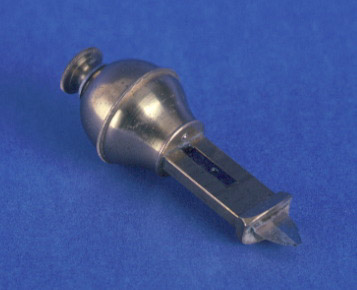
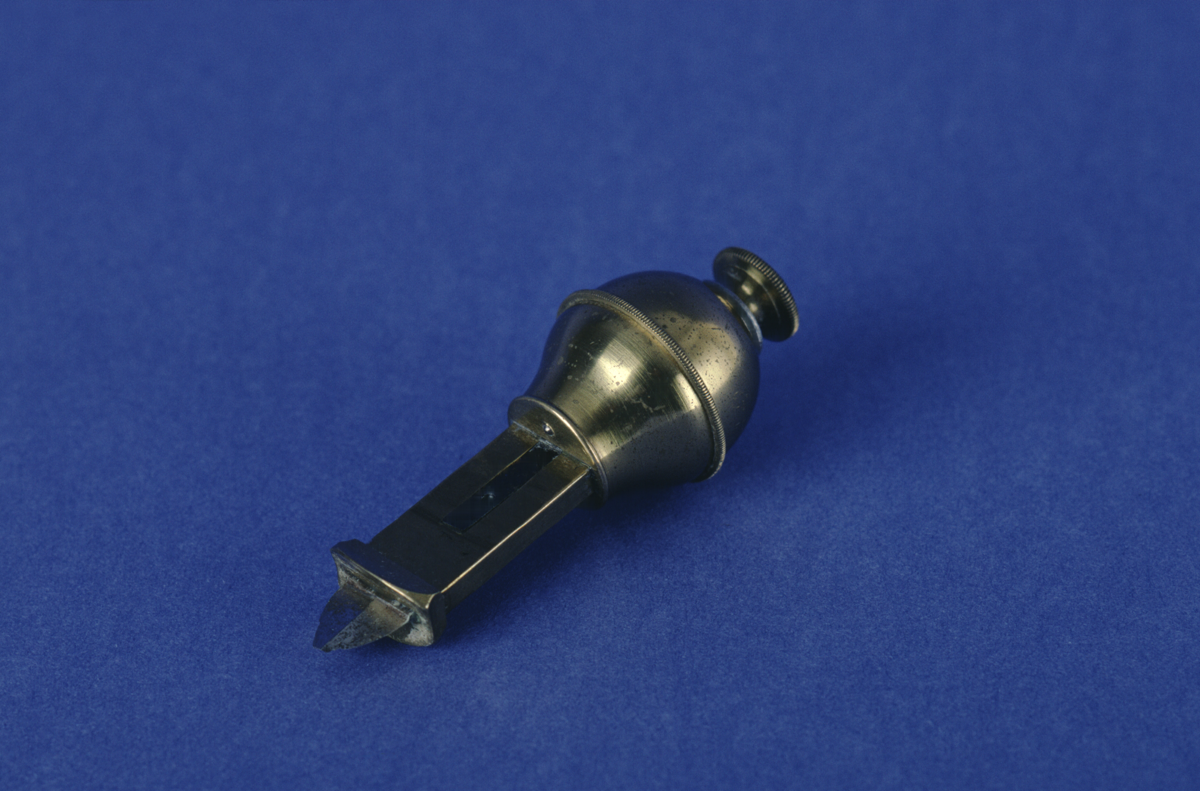
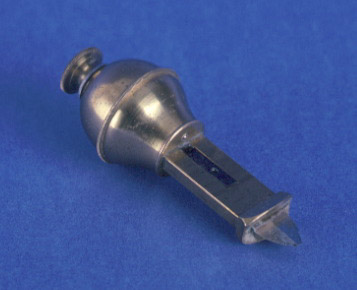
spring lancet, also called spring fleam or schnapper, circa 1800
Origin
Maker
Class
medical
Earliest Date
1800
Latest Date
1800
Inscription Date
Material
metal (brass, steel); wood; leather; cloth (velvet)
Dimensions
length 95mm
Special Collection
Provenance
Inscription
Description Notes
Spring lancet, also called spring fleam or schnapper; circa 1800
Brass with steel blade. Screw on head of instrument adjusts blade depth. Steel centre plate with apperture for [spring lever] missing. Wooden box with worn velvet lining.
Incomplete
References
Events
Description
Bleeding was accepted as a cure for a wide variety of medical complaints since Hippocrates teachings in the 5th century BC. It continued to be a popular until the 20th century. Physicians were known to have kept and consulted complex charts that showed which parts of the body should be bleed for each illness.
Early blood letters would have used a sharp stone or piece of wood to “breath a vein”. Blood would then drain from the vein into a bleeding bowl. The lancet became a popular blood letting instrument.
The spring lancet or ‘schnepper’ was first described in German by Heister in 1719. It allowed the operator to cut into the vein without direct manual pressure. It was widely accepted, particularly in Germany, Holland and America where it was preferred to the simple thumb lancet. British and French surgeons felt that it was too complicated, no more efficient and since the only advantage of it was that it could be used by inexperienced operators it was not something to be encouraged.
Further developments to the spring lancet saw the introduction of scarificators in the 17th century. A scarificator consists of a brass box with 4 to 16 spring loaded blades which are released to make a series of cuts in the patient. A heated cupping glass is then applied over the cuts. As the cupping glass cools a vacuum is created. This vacuum draws the blood from the body and collects it within the cupping glass.
FM:40830
Images (Click to view full size):