Accession No
3133
Brief Description
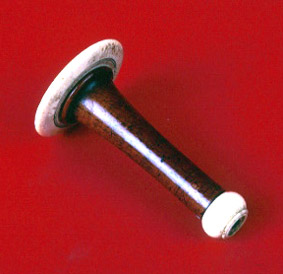
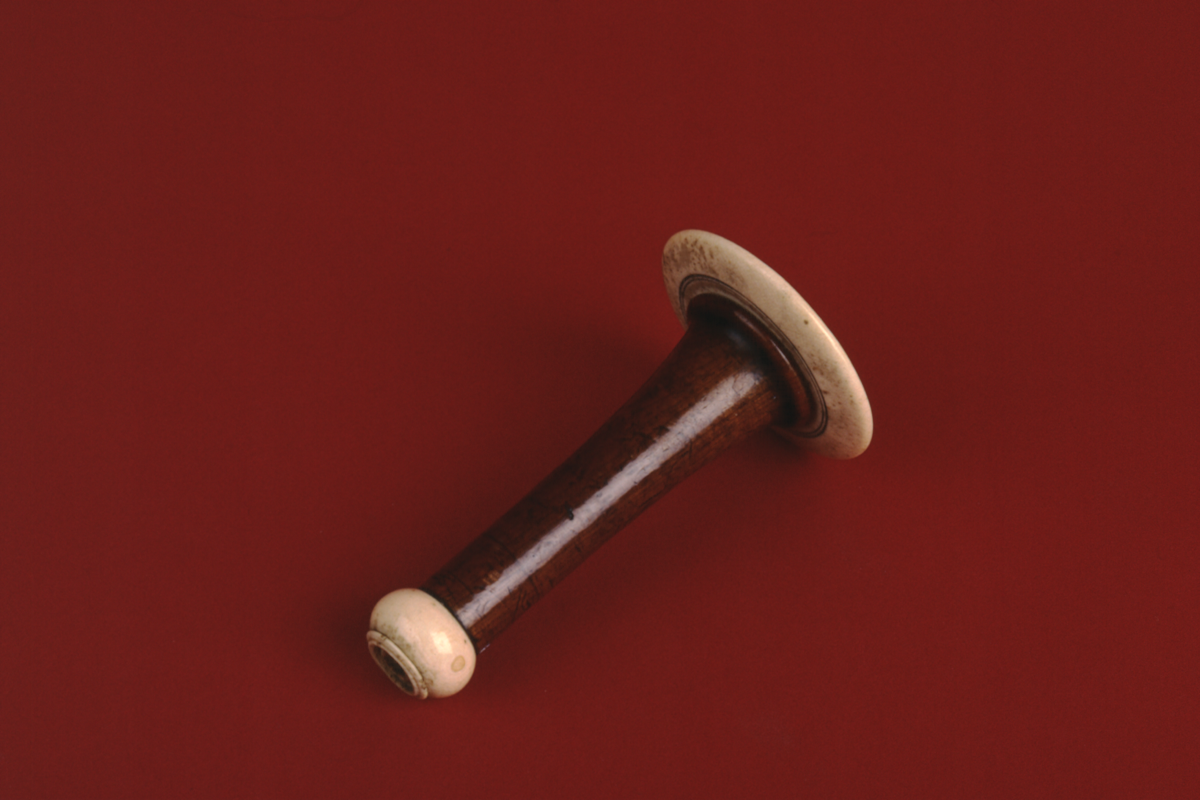
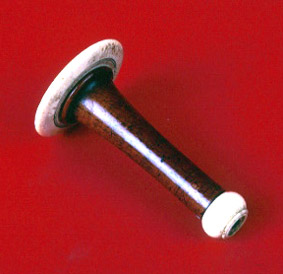
monaural stethoscope, English [assumed], circa 1900
Origin
England; Birmingham [presumed - see provenance]
Maker
Class
medical
Earliest Date
1900
Latest Date
1900
Inscription Date
Material
wood; ivory
Dimensions
length 99mm; maximum diameter 56mm
Special Collection
Provenance
Loan changed to donation from 07/10/2008. On loan to museum from 1984 to 07/10/2008. Donor indicated that object may have been owned by Charles Albert Leedham-Green, Prof. of Sugery at Birmingham Uni.
Inscription
Description Notes
monaural stethoscope; circa 1900.
Wooden tube with ivory chest piece; screw fits to wooden and ivory ear-piece
References
Events
Description
This type of stethoscope was used before the more familiar binaural stethoscopes came into use. The monaural stethoscope consisted of a simple, singular tube which the physician would hold against the patients chest and listen through at the other end.
The first monaural stethoscope is the simple wooden cylinder invented by Laennec in 1819. He was working in the Paris hospitals where increasingly patients were being physically examined prior to diagnosis. Laennec realised that the use of an ear-trumpet, originally made of paper, amplified sounds in the chest to a remarkable extent. His work was first published in English in 1825 and Lydgate, a disciple of Paris medicine ‘not only used his stethoscope (which had not quite become a matter of course in practice at that time), but sat quietly by his patient and watched him’, another new idea in medical practice in the 1830s.
Many of these stethoscopes were made of wood, ivory, brass or silver and were often modified by the physicians themselves.
Very long stethoscopes were used in poorhouses during the Victorian era so that the physician could keep as far away from their patient as possible!
25/08/2006
Created by: Updated by Ruth Horry on 25/08/2006
FM:40861
Images (Click to view full size):