Accession No
2505
Brief Description
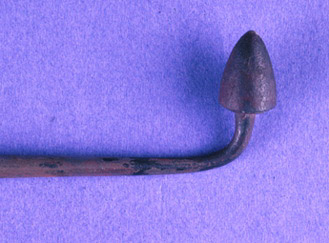
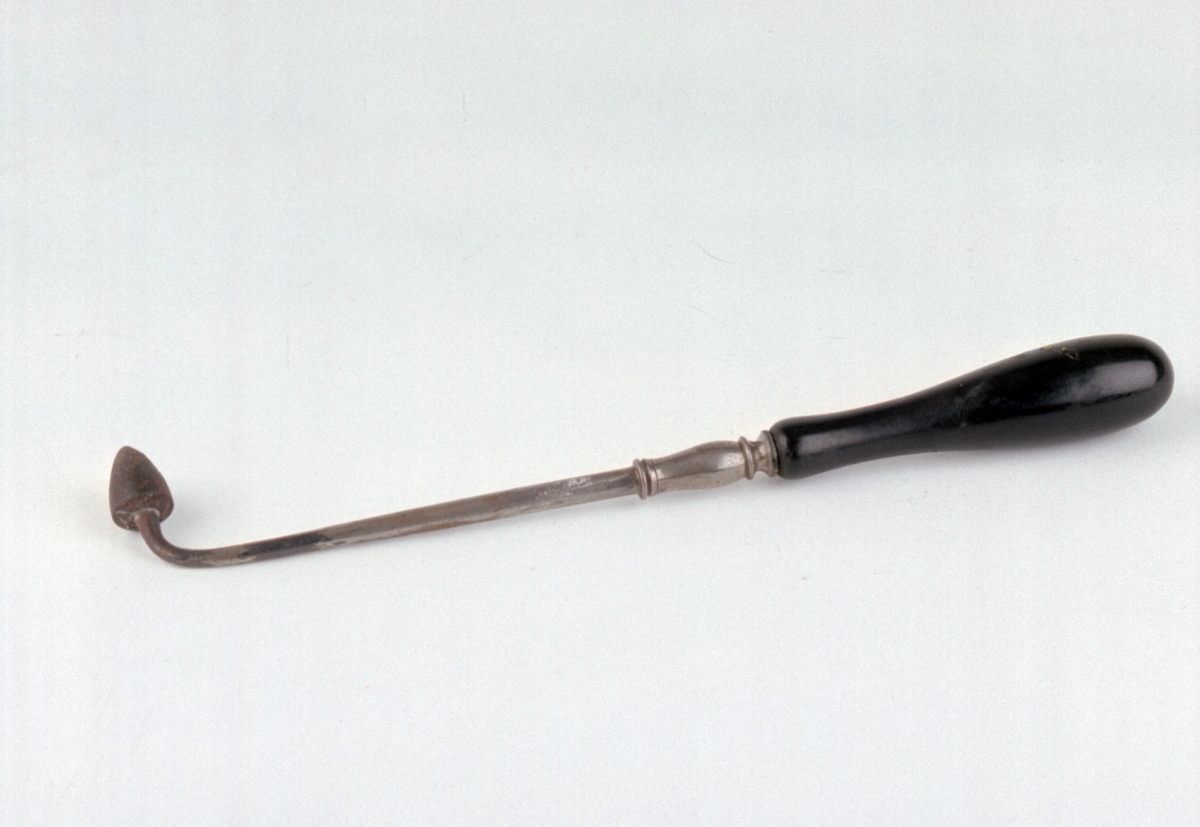
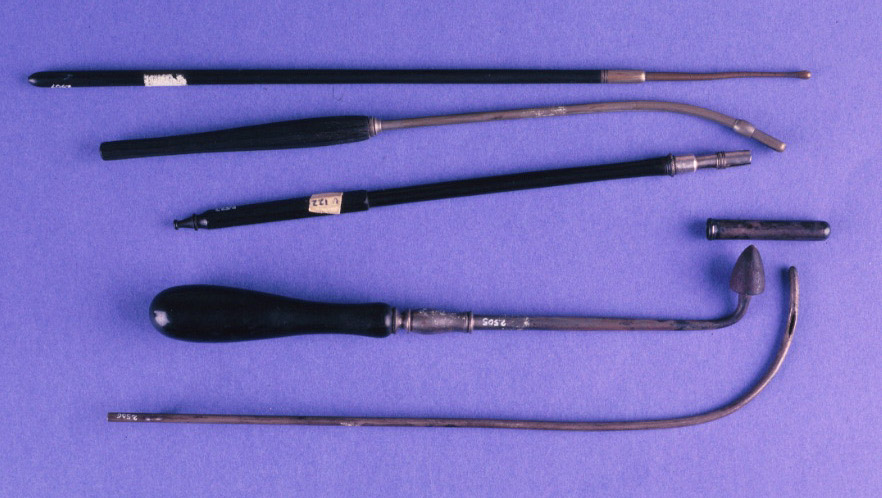
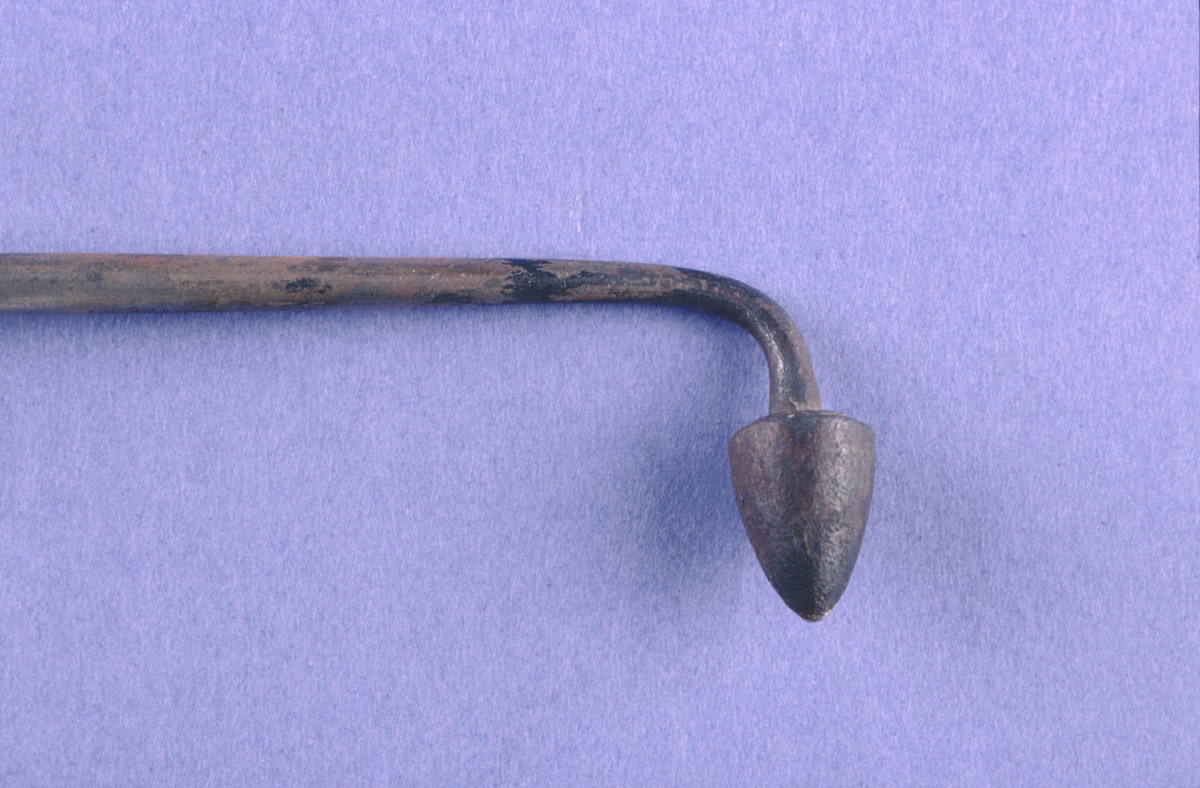
cautery iron made by Weiss, c.1820
Origin
Maker
Weiss
Class
medical
Earliest Date
1820
Latest Date
1820
Inscription Date
Material
metal (silver; iron); wood (ebony)
Dimensions
length 229mm; breadth 40mm; depth 23mm
Special Collection
Provenance
Inscription
‘WEISS’ (on shaft)
Description Notes
Ebony handle. Silver-plated iron shaft. Head at right angles to shaft; pointed, tapered cylinder.
Condition
References
Events
Description
The cautery iron was widely used to seal wounds and stem bleeding and this type of tool would have been an essential part of any surgeons equipment. The cautery iron would have been heated to a high temperature and then applied either directly to the severed blood vessel to stem bleeding, or more generally to the open wound. The heat action would sear the tissue, preventing loss of blood and sterilising the wound, but producing a scar that would often extend to three times the size of the original wound. Modern forms of cauterisation use caustic chemicals like nitric acid and electrocautery equipment which work by cauterisation through an electrical current. Today cauterisation is used only to seal small bleeding points and remove benign lesions.
FM:40862
Images (Click to view full size):